
Lobo Airstrip in Serengeti National Park: The Complete Guide to Northern Serengeti Fly-in Safaris
Planning a safari in Serengeti National Park often begins with choosing where to stay and which wildlife experiences you hope to enjoy. However, one decision that can significantly shape your entire journey is selecting the right entry point into the park. While many travelers are familiar with Seronera or Kogatende, Lobo Airstrip remains one of the Serengeti's lesser-known gateways, offering exceptional access to the northern wilderness, abundant wildlife, and a quieter safari experience.
Located in the northeastern section of Serengeti National Park, Lobo Airstrip provides direct access to a landscape that feels noticeably different from the vast open plains of central Serengeti. Here, rolling hills rise gently above the savannah, ancient granite kopjes dominate the horizon, seasonal rivers cut through the grasslands, and scattered woodlands provide shelter for a remarkable diversity of wildlife.
The result is a safari destination where every game drive offers changing scenery and fresh opportunities to observe animals behaving naturally within a wide range of habitats.
Flying directly to Lobo Airstrip also transforms the way visitors experience the Serengeti. Rather than spending many hours travelling by road across northern Tanzania, a short bush flight places you in the heart of the northern ecosystem, allowing more time to explore, photograph wildlife, and appreciate one of Africa's most celebrated conservation areas.
For travelers planning a Luxury Tanzania Safari, a Fly-in Safari Tanzania, a Serengeti Fly-in Safari, or a Tanzania Safari from Zanzibar, Lobo Airstrip offers both convenience and outstanding wildlife viewing. It is also an excellent starting point for longer itineraries that combine the Serengeti with the Ngorongoro Crater or follow the Great Migration as it moves across northern Tanzania.
In this guide, you'll discover everything you need to know about Lobo Airstrip, including its location, flight connections, nearby wildlife, migration patterns, safari experiences, practical travel advice, and the best time of year to visit.
Where Is Lobo Airstrip Located?
Lobo Airstrip is situated in the northeastern part of Serengeti National Park, close to the Lobo Valley and within convenient driving distance of the northern migration routes.
Its position makes it one of the most strategically located airstrips for travelers wishing to explore the northern Serengeti without being based directly at the Mara River. Visitors can comfortably enjoy wildlife-rich areas around Lobo while still reaching northern migration hotspots during full-day game drives when the season is right.
Geographically, the Lobo region forms a natural transition between central Serengeti and the far northern plains. This creates a remarkable variety of landscapes within a relatively small area.
Open grasslands gradually merge into gently rolling hills.
Woodlands provide shade and cover for predators.
Rocky kopjes rise dramatically above the surrounding plains, offering ideal lookout points for lions and leopards. Seasonal rivers support lush vegetation that attracts herbivores throughout much of the year.
This diversity of habitats allows wildlife to thrive even when migration herds are elsewhere, making Lobo one of the Serengeti's most reliable year-round safari destinations.
Why Lobo Airstrip Is an Important Gateway to Northern Serengeti
Many first-time visitors assume that northern Serengeti is only worth visiting during the famous Mara River crossings. In reality, the northern ecosystem supports exceptional wildlife throughout the year, and Lobo Airstrip provides one of the easiest ways to experience it.
Its importance lies in its flexibility. Travelers arriving through Lobo are well positioned to explore several distinct wildlife regions without undertaking long transfers.
Depending on current wildlife movements, your guide may spend one morning exploring the rolling hills surrounding Lobo before heading north toward migration activity or south toward central Serengeti on subsequent days.
This flexibility becomes particularly valuable because wildlife in the Serengeti is constantly moving.
Rainfall patterns influence grazing.
Predators follow prey.
Elephants shift between woodlands and water sources.
Birdlife changes with the seasons.
Beginning your safari near Lobo allows experienced guides to adapt daily game drives according to current conditions rather than being restricted to a single area.
The Landscape Around Lobo Is Unlike Anywhere Else in Serengeti
One of the first things visitors notice after landing at Lobo Airstrip is how different the landscape feels compared with the classic image of endless Serengeti plains.
Instead of uninterrupted grasslands stretching to the horizon, the Lobo region offers a landscape shaped by ancient geological activity.
Massive granite formations, known as kopjes, rise from the savannah like natural islands.
These rocky outcrops are more than beautiful landmarks.
They provide shade during the hottest part of the day, shelter for smaller mammals, nesting sites for birds of prey, and elevated observation points for predators.
Lions are frequently seen resting across warm granite slabs before becoming active during the cooler hours of the day.
Leopards often use nearby trees and rocky crevices to remain concealed while watching unsuspecting prey moving below.
The rolling terrain also creates constantly changing viewpoints.
Rather than driving across perfectly flat plains, visitors repeatedly crest gentle hills to discover new valleys, scattered acacia woodlands, and wildlife that had previously been hidden from view.
For photographers, these variations create far more dynamic compositions than are often possible on completely open grasslands.
Morning light filtering across the hills produces long shadows, while late afternoon sunlight transforms the granite kopjes into striking golden landmarks.
Why Wildlife Thrives Around Lobo Throughout the Year
Although the Great Migration dramatically increases wildlife numbers during certain months, the Masai Mara region never depends entirely on migrating animals.
Permanent resident wildlife forms the foundation of this ecosystem.
The varied landscape provides reliable food, water, and shelter for numerous species regardless of the migration season.
Large elephant herds move between woodland feeding areas and seasonal water courses.
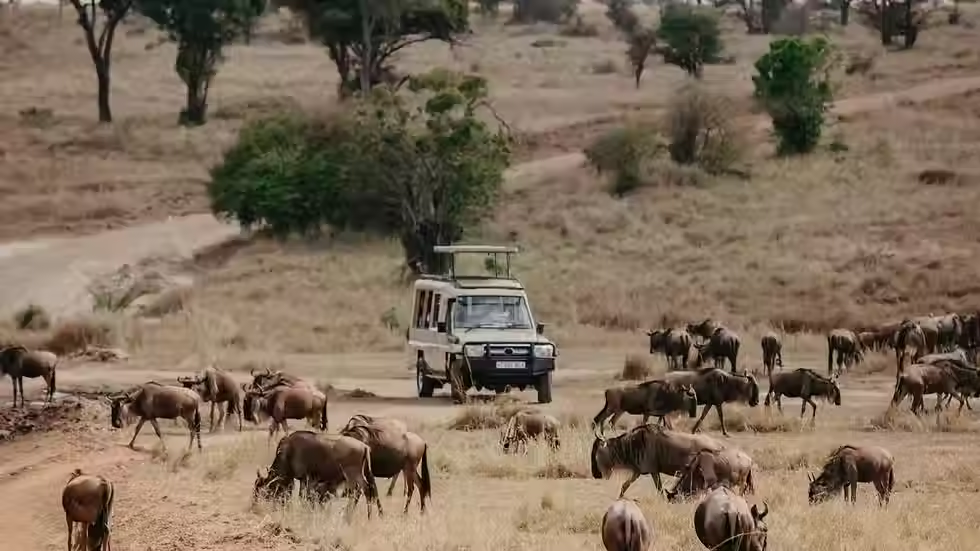
Buffalo graze across open grasslands before retreating into thicker vegetation during the hottest hours. Giraffes browse from umbrella acacia trees while impalas, topis, hartebeests, and zebras spread across the surrounding plains.
These herbivores support healthy predator populations.
Lions maintain territories around the kopjes where elevated rocks provide excellent vantage points. Leopards prefer wooded riverbeds where dense vegetation offers cover.
Spotted hyenas patrol enormous territories throughout the region, while cheetahs take advantage of more open grasslands where speed becomes their greatest hunting advantage.
Because these animals remain in the region year-round, visitors arriving outside migration season still enjoy consistently rewarding game drives.
Instead of focusing exclusively on migrating herds, guides often spend more time interpreting animal behavior, tracking predators, and exploring habitats that many visitors overlook during peak migration months.
Flying to Lobo Airstrip Saves Valuable Safari Time
Time is one of the most valuable resources during any safari.
Every hour spent driving between destinations is an hour not spent watching wildlife.
Choosing a fly-in safari changes that balance completely. A scheduled bush flight from Arusha allows visitors to reach Lobo within a relatively short time while enjoying breathtaking aerial views of northern Tanzania.
As the aircraft approaches Serengeti National Park, the landscape gradually transforms beneath you. Agricultural land disappears. Acacia woodlands become increasingly common.
Seasonal rivers wind through golden plains. Wildlife can often be seen from the air, appearing as small moving dots scattered across the vast ecosystem.
Landing at Lobo Airstrip marks the beginning of the safari rather than the end of a long transfer.
After meeting your professional guide, you begin driving immediately through wildlife-rich landscapes where your first sightings often occur within minutes. Elephants may be feeding close to the road. Giraffes browse quietly among scattered trees. Lions occasionally rest beneath kopjes overlooking the surrounding plains.
This seamless transition from aircraft to game drive is one of the greatest advantages of choosing a Serengeti Fly-in Safari.
Instead of arriving tired after a full day on the road, visitors begin experiencing the Serengeti almost immediately.
Flights to Lobo Airstrip: Routes, Airlines, and What to Expect
One of the biggest advantages of choosing Lobo Airstrip is how easily it connects travelers with the northern Serengeti. Although the area feels wonderfully remote once you arrive, reaching it is straightforward thanks to Tanzania's well-established network of scheduled bush flights.
Flying directly into the park eliminates the need for a long drive from Arusha, allowing you to spend more of your holiday where it matters most—watching wildlife. For travelers with limited time, this can make a significant difference. Instead of arriving at your lodge late in the evening after an entire day on the road, you can often land at Lobo before midday and enjoy an afternoon game drive on the very same day.
For many visitors, the bush flight itself becomes part of the safari experience. The aircraft flies at a lower altitude than commercial airlines, offering uninterrupted views of rivers, forests, kopjes, and the vast Serengeti plains stretching to the horizon.
Flight Link Air
Airlines That Operate Flights to Lobo Airstrip
Several reputable safari airlines provide scheduled services to Lobo Airstrip throughout the year. These carriers specialize in connecting Tanzania's national parks and conservation areas, making it easy to combine multiple destinations within one itinerary.
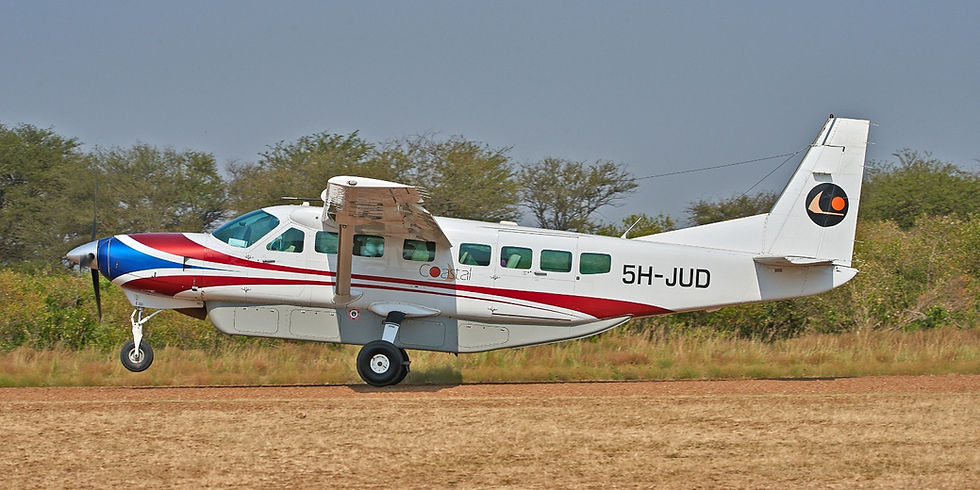
The airlines most commonly serving Lobo include:
Coastal Aviation
Auric Air
Flightlink
Regional Air
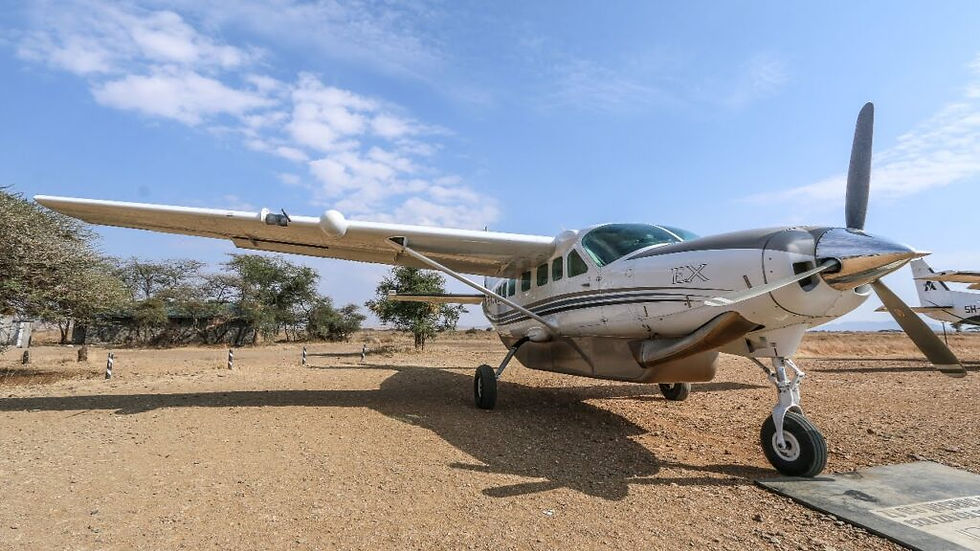
These operators use light aircraft specifically designed for bush airstrips. While the aircraft are smaller than commercial planes, they are perfectly suited for safari travel and provide excellent visibility throughout the journey.
Most flights include several stops at other Serengeti airstrips, allowing passengers to appreciate different parts of the park before reaching Lobo.
Popular Flight Routes to Lobo Airstrip
Arusha to Lobo Airstrip
Arusha is the primary departure point for most northern Tanzania safaris.
Flights from Arusha to Lobo generally take between one and two hours depending on the number of scheduled stops.
Choosing this route allows visitors to begin their safari almost immediately after arriving in northern Tanzania.
Instead of driving across the Serengeti for an entire day, travelers are transported directly into one of the park's richest wildlife regions.
Kilimanjaro International Airport to Lobo
International visitors arriving through Kilimanjaro International Airport can connect to Lobo either on the same day or after an overnight stay in Arusha.
Many travelers choose to spend one night in Arusha after a long international flight before continuing to the Serengeti the following morning.
This provides time to rest while ensuring the safari begins with maximum energy and enthusiasm.
Zanzibar to Lobo Airstrip
Combining Zanzibar with the Serengeti has become one of Tanzania's most popular travel experiences.
After relaxing on Zanzibar's white-sand beaches, visitors can board a scheduled bush flight and arrive in the northern Serengeti within a matter of hours.
This creates an extraordinary contrast between two completely different worlds.
One day you are swimming in the warm waters of the Indian Ocean.
The next, you are watching elephants cross the savannah or listening to lions roaring beneath an African sunset.
For travelers planning a Tanzania Safari from Zanzibar, Lobo Airstrip provides a convenient gateway to northern Serengeti without unnecessary road travel.
Connections Between Serengeti Airstrips
Lobo is also connected to several other airstrips within the Serengeti ecosystem.
These include:
Seronera Airstrip
Kogatende Airstrip
Grumeti Airstrip
Ndutu Airstrip (seasonal)
Kirawira Airstrip
These connections allow travelers to explore different regions of the Serengeti during one safari while following seasonal wildlife movements.
A longer itinerary might begin in central Serengeti before continuing north to Lobo and Kogatende as the Great Migration progresses.
This flexibility is one of the greatest advantages of a Fly-in Safari in Tanzania, allowing visitors to experience several ecosystems without lengthy overland transfers.
How Much Do Flights to Lobo Airstrip Cost?
Flight prices depend on the airline, departure point, travel season, and availability.
As a general guide, travelers can expect:
Route | Estimated One-Way Fare |
Arusha – Lobo | USD 250–450 |
Kilimanjaro – Lobo | USD 300–500 |
Zanzibar – Lobo | USD 350–650 |
Seronera – Lobo | USD 180–350 |
Kogatende – Lobo | USD 180–350 |
Many visitors book these flights as part of a complete safari package, which often simplifies logistics and provides better overall value than arranging flights independently.
What Is It Like Landing at Lobo Airstrip?
Unlike major airports, Lobo Airstrip offers an arrival experience that immediately immerses you in the wilderness.
There are no crowded terminals, baggage carousels, or busy parking areas.
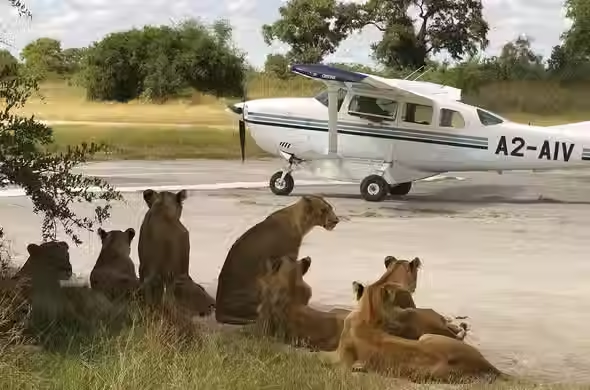
Instead, the aircraft lands on a simple bush runway surrounded by the natural landscapes of the Serengeti.
Your luggage is unloaded manually while your safari guide prepares the vehicle nearby.
Within minutes of stepping off the aircraft, you are already inside a fully equipped safari vehicle heading toward your accommodation.
Because the airstrip lies within the national park, wildlife sightings often begin almost immediately.
It is not unusual to encounter giraffes feeding near the runway, elephants crossing nearby tracks, or zebras grazing only a short distance from where the aircraft has landed.
From the very beginning, the transfer to your lodge becomes your first game drive.
How Lobo Differs from Seronera and Kogatende
Although all three airstrips serve Serengeti National Park, each offers access to a different type of safari experience.
Understanding these differences helps travelers choose the destination that best matches their expectations.
Lobo Airstrip
Lobo is ideal for visitors seeking diverse landscapes, year-round wildlife, and a quieter atmosphere.
Its rolling hills, granite kopjes, woodlands, and open plains create excellent habitats for resident wildlife while also providing seasonal access to the Great Migration.
The lower number of safari vehicles often results in more peaceful wildlife encounters.
Seronera Airstrip
Seronera sits in the heart of central Serengeti and is considered the park's most versatile safari destination.
The area supports exceptional predator populations throughout the year because permanent water sources attract resident herbivores regardless of migration patterns.
Travelers choosing Seronera often prioritize reliable game viewing over seasonal migration events.
Kogatende Airstrip
Kogatende is the preferred gateway for visitors hoping to witness the famous Mara River crossings. During peak migration season, enormous herds gather in the northern Serengeti before attempting to cross into Kenya's Maasai Mara.
The area experiences high visitor numbers during these months because of the extraordinary wildlife spectacles taking place along the river.
Outside migration season, however, wildlife disperses more widely across the northern ecosystem.
Why Many Experienced Safari Travelers Choose Lobo
While first-time visitors often focus exclusively on the Great Migration, experienced safari enthusiasts frequently appreciate something different.
They value quieter landscapes. They enjoy observing animal behavior without large numbers of vehicles.
They seek greater variety in scenery rather than spending every day on open plains.
Lobo delivers precisely that experience.
Because the area combines woodlands, rocky hills, seasonal rivers, and grasslands, game drives rarely feel repetitive.
One morning may involve photographing lions resting on granite kopjes.
The afternoon could be spent watching elephants feeding beneath towering acacia trees before ending the day with giraffes silhouetted against the setting sun.
This diversity makes Lobo particularly rewarding for travelers spending several days in the Serengeti.
Each drive reveals a different side of the ecosystem.
The Wildlife Starts the Moment You Leave the Airstrip
One of the most enjoyable aspects of arriving at Lobo Airstrip is that there is no clear distinction between transport and safari.
As soon as your guide begins driving, every kilometer presents opportunities for wildlife encounters.
The roads surrounding Lobo pass through habitats regularly used by:
African elephants
Lions
Leopards
Buffaloes
Giraffes
Zebras
Topis
Hartebeests
Warthogs
Spotted hyenas
Jackals
Numerous bird species
Your guide continually interprets tracks, animal behavior, and the surrounding landscape, helping you understand not only what you are seeing but why each species occupies that particular habitat.
This deeper understanding transforms ordinary wildlife sightings into memorable learning experiences.
Why Lobo Is Ideal for Fly-in Safaris
Fly-in safaris are becoming increasingly popular because they allow visitors to maximize their time inside Tanzania's national parks. Rather than allocating entire days to road travel, bush flights connect distant safari regions quickly and comfortably. Lobo Airstrip is particularly well suited to this style of travel.
It allows guests to combine northern Serengeti with destinations such as the Ngorongoro Crater, Tarangire National Park, or even Zanzibar within a relatively short itinerary.
For travelers planning a Luxury Tanzania Safari, this efficiency creates a more relaxed pace, allowing additional game drives, leisurely afternoons at camp, and greater flexibility to follow wildlife wherever guides believe conditions are best.
The result is not simply a faster journey but a richer safari experience where more of your holiday is spent exploring one of the world's greatest wildlife ecosystems.
Best Time to Visit Lobo Airstrip for a Serengeti Safari
One of the greatest advantages of choosing Lobo Airstrip is that it provides rewarding wildlife viewing throughout the year. While many areas of the Serengeti become famous because of a single seasonal event, the Lobo region offers a much more balanced safari experience. Its combination of permanent resident wildlife, varied landscapes, and proximity to the northern migration routes means there is always something remarkable to see, regardless of when you visit.
That said, every season reveals a different side of the northern Serengeti. Rainfall influences vegetation, wildlife movements, and predator behavior, meaning the experience in January can be completely different from the experience in August.
Understanding these seasonal changes allows you to choose the best travel period based on the type of safari you want rather than simply following the busiest tourist season.
January to March: A Peaceful Safari with Outstanding Resident Wildlife
The beginning of the year is one of the quietest times around Lobo Airstrip, but that should never be mistaken for poor wildlife viewing.
During these months, the Great Migration is concentrated much farther south around the Ndutu region, where wildebeest gather for the calving season. Even though the migration has moved away, the Lobo ecosystem remains remarkably active because thousands of resident animals never leave the area.
Elephants travel between woodland feeding grounds and seasonal rivers, while buffaloes graze across the open plains. Giraffes browse peacefully among the acacia trees, and predators continue hunting within their established territories.
The reduced number of visitors creates an especially relaxed safari atmosphere. Wildlife sightings often take place without multiple safari vehicles surrounding the animals, allowing guides to spend more time observing natural behavior.
For photographers, this period offers lush green landscapes created by seasonal rains. Fresh vegetation, dramatic cloud formations, and soft morning light produce beautiful photographic conditions that contrast strongly with the golden scenery of the dry season.
April to June: The Landscape Comes Alive
As the long rains gradually give way to drier conditions, the Lobo region begins another transformation.
The grass remains relatively tall, seasonal streams continue flowing, and herbivores spread across the surrounding plains in search of fresh grazing. Predator activity remains excellent because prey animals are widely distributed throughout the ecosystem.
Although the largest migration herds are still making their way through the western Serengeti during much of this period, northern Serengeti remains exceptionally rewarding for travelers who appreciate quieter game drives.
One of the greatest benefits of visiting during these months is the feeling of exclusivity.
The Serengeti feels vast and peaceful.
Instead of rushing from one famous sighting to another, guides have time to explore lesser-known areas, follow fresh predator tracks, and interpret the complex relationships between animals and their environment.
Visitors often leave with a much deeper understanding of the Serengeti ecosystem than they expected.
July to October: The Great Migration Reaches Northern Serengeti
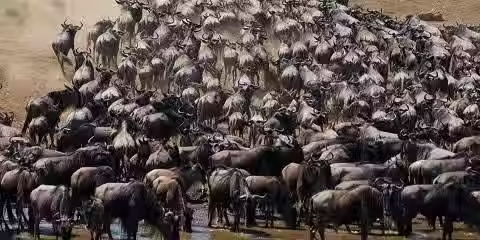
This is the season that places northern Serengeti among Africa's greatest wildlife destinations. As the dry season progresses, enormous herds of wildebeest, zebras, and gazelles move steadily northward in search of fresh grazing.
Although the Mara River crossings receive most of the international attention, the migration does not suddenly appear at the river.
For weeks beforehand, the herds spread across the northern Serengeti, moving through areas surrounding Lobo as they continue their remarkable journey.
Visitors staying near Lobo often witness thousands of wildebeest stretching across the plains, accompanied by zebras whose remarkable memories help guide the migration toward reliable water sources.
The movement is continuous.
Small groups merge into larger herds.
Animals pause to graze before continuing north.
Young calves remain close to their mothers while dominant males patrol the edges of the migration.
Watching this process unfold reveals that the Great Migration Safari is not a single event but an ongoing journey driven entirely by rainfall and the search for nutritious grass.
Predators quickly take advantage of this abundance.
Lions establish hunting positions near frequently used routes.
Spotted hyenas patrol behind the herds, searching for vulnerable individuals.
Cheetahs exploit the open plains where their extraordinary speed gives them an advantage.
Even leopards become more active as wildlife densities increase throughout the region.
Although many travelers continue farther north to witness river crossings, remaining near Lobo often provides a more varied safari experience, combining migration viewing with exceptional resident wildlife and beautiful landscapes.
November to December: The Return Journey Begins
The arrival of the short rains signals another transition within the Serengeti ecosystem.
Fresh grass begins emerging across southern regions of the park, gradually encouraging the migration to begin its long return journey.
Around Lobo, wildlife becomes more dispersed as seasonal water sources reappear.
The scenery changes rapidly.
Golden grasslands are replaced by fresh green vegetation.
Trees become increasingly vibrant.
Birdlife flourishes as insects emerge following the rains.
For visitors interested in photography, this season produces striking contrasts between dramatic skies and brightly coloured landscapes.
The quieter atmosphere also makes this an excellent period for travelers seeking a more private safari experience.
The Great Migration Around Lobo: More Than a River Crossing
Many people assume that northern Serengeti is important only because of the Mara River crossings. In reality, the migration around Lobo is every bit as fascinating.
The days leading up to the river crossings often reveal some of the migration's most remarkable behavior.
As the herds approach the northern Serengeti, they begin spreading across enormous areas of open grassland. Rather than moving in a perfectly organized line, the migration constantly changes direction. Animals pause to graze. They regroup. They react to predators.
They respond to changing weather.
At times, thousands of wildebeest may appear to move confidently toward the river before suddenly turning away and traveling several kilometers in another direction.
This unpredictability reflects one of the defining characteristics of the Great Migration.
There is no leader directing the herds.
Movement emerges collectively through instinct, environmental conditions, and communication between individual animals.
Observing this behavior around Lobo provides visitors with a deeper appreciation of the migration as an ecological process rather than simply a dramatic river crossing.
Why Lobo Is Excellent for Predator Sightings
The northern Serengeti supports an impressive concentration of predators throughout the year. Several factors contribute to this. The varied terrain provides excellent hunting opportunities. Woodlands allow predators to remain concealed. Rocky kopjes serve as natural observation points.
Open plains create ideal conditions for high-speed pursuits.
Seasonal rivers attract herbivores that must visit reliable water sources.
Each predator species takes advantage of these habitats differently.
Lions often rest on elevated rocks during the hottest part of the day before becoming active in the early morning and late afternoon. Leopards favour wooded riverbeds where dense vegetation provides cover. Cheetahs remain close to open plains where they can accelerate rapidly while hunting gazelles or young wildebeests.
Spotted hyenas patrol extensive territories both day and night, demonstrating remarkable intelligence and social cooperation.
Because predator territories remain relatively stable throughout the year, guides familiar with the area often know where particular prides or individuals are likely to be found.
This increases the chances of memorable wildlife encounters even outside migration season.
Birdwatching Around Lobo Airstrip
Although the Serengeti is internationally famous for large mammals, the Lobo region is equally rewarding for bird enthusiasts. The combination of woodlands, grasslands, seasonal wetlands, and rocky habitats supports hundreds of bird species.
Large raptors soar above the hills searching for prey.
Secretary birds stride confidently across the plains hunting snakes and insects.
Lilac-breasted rollers add brilliant colour to the landscape, while hornbills, bee-eaters, barbets, and kingfishers thrive in woodland habitats.
During the rainy seasons, migratory bird species further increase the region's diversity.
Even visitors primarily interested in mammals often find themselves surprised by the spectacular birdlife encountered throughout the safari.
Who Should Choose Lobo Airstrip?
One of Lobo's greatest strengths is its versatility.
The region appeals to many different types of safari travelers because it combines accessibility with exceptional wildlife viewing.
Wildlife Photographers
Photographers benefit from the area's constantly changing scenery.
Rolling hills, granite kopjes, scattered acacia trees, and open plains provide far more compositional variety than completely flat landscapes.
Morning and evening light creates particularly dramatic opportunities for landscape and wildlife photography.
Families
Families appreciate the convenience of flying directly into northern Serengeti rather than spending long hours travelling by road.
Shorter transfers allow children to begin enjoying wildlife almost immediately while reducing travel fatigue.
Honeymoon Couples
For couples seeking a romantic safari, Lobo offers privacy, beautiful scenery, and exclusive camps located far from busy tourist areas.
Watching the sunset over the northern Serengeti after a day spent exploring wildlife-rich landscapes creates memories that last long after the safari has ended.
Returning Safari Visitors
Travellers who have previously visited central Serengeti often discover that Lobo offers an entirely different perspective on the ecosystem.
The landscapes, wildlife behaviour, and quieter atmosphere make the region especially rewarding for those wishing to experience another side of the Serengeti.
Safari Itineraries That Include Lobo Airstrip
Lobo Airstrip fits naturally into a wide variety of northern Tanzania itineraries.
A 4 Day Fly-in Safari may focus entirely on northern Serengeti, allowing visitors to maximise wildlife viewing while avoiding lengthy road transfers.
Longer itineraries often combine Lobo with central Serengeti before continuing to the Ngorongoro Crater, creating an unforgettable Serengeti and Ngorongoro Safari.
Visitors traveling from the coast frequently include Lobo as part of a Tanzania Safari from Zanzibar, flying directly into the park before exploring multiple wildlife regions.
For travelers seeking the highest level of comfort, Lobo also features in many Luxury Tanzania Safari itineraries, where scheduled bush flights, premium accommodation, and personalised guiding create a seamless safari experience.
Whatever itinerary you choose, Lobo Airstrip provides a convenient gateway to one of the Serengeti's most rewarding and least crowded regions.
Practical Travel Information for Lobo Airstrip
Preparing for a safari through Lobo Airstrip is relatively straightforward, but understanding how bush air travel works will help you enjoy a smoother and more comfortable journey.
Unlike major international airports, Lobo Airstrip is a small bush airstrip designed specifically for safari operations. There are no large terminals or commercial airport facilities. Instead, the experience is simple, efficient, and designed to get you into the wilderness as quickly as possible.
After landing, your luggage is unloaded while your professional safari guide welcomes you. Within a few minutes, you'll be seated in a specially equipped 4×4 safari vehicle, and your first game drive begins almost immediately.
One of the unique aspects of arriving through Lobo is that wildlife is often visible before you even reach your accommodation. It is not uncommon to see giraffes grazing near the airstrip, elephants crossing nearby tracks, or zebras feeding peacefully across the surrounding plains.
This seamless transition from aircraft to safari vehicle allows you to spend less time on logistics and more time enjoying the incredible wildlife that makes Serengeti National Park one of the world's greatest safari destinations.
Accommodation Near Lobo Airstrip
The area surrounding Lobo Airstrip offers a range of accommodation options that cater to different travel styles and budgets. Whether you are looking for a luxurious fly-in safari or a comfortable mid-range adventure, there are excellent choices within easy reach of the airstrip.
The greatest advantage of staying near Lobo is not simply the quality of the accommodation but its location. Many camps are positioned close to prime wildlife areas, allowing guests to begin game drives at sunrise when animals are most active.
Instead of spending valuable time driving from distant lodges, visitors can focus on exploring the northern Serengeti while making the most of every safari day.
Luxury Safari Lodges
Luxury lodges around Lobo are designed for travelers who value comfort without sacrificing their connection to nature.
Guests can expect spacious suites, beautifully furnished lounges, excellent cuisine, private viewing decks, and attentive service. Many properties overlook open plains or rocky kopjes where wildlife can often be observed directly from the lodge.
These accommodations are particularly popular with honeymoon couples, photographers, and visitors celebrating special occasions.
Luxury Tented Camps
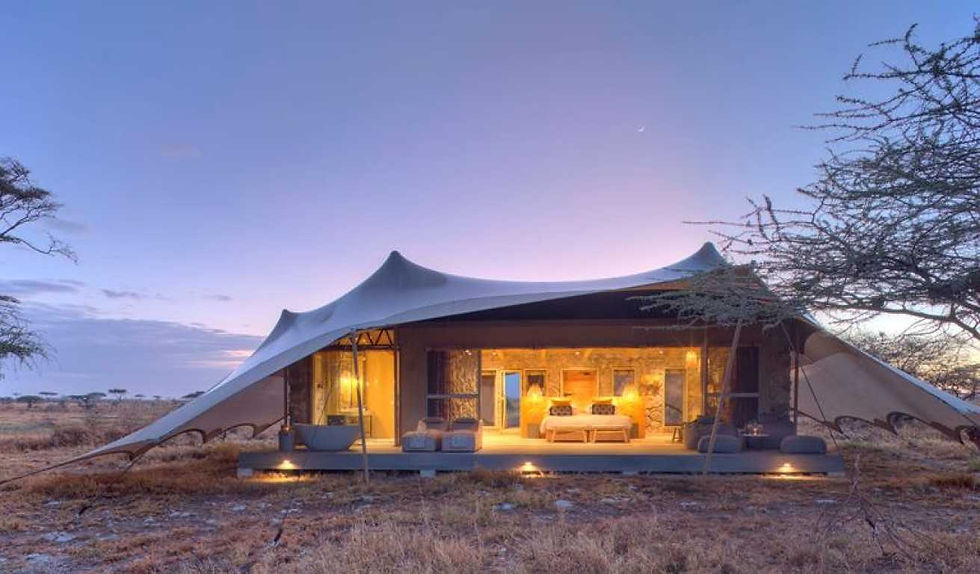
Luxury tented camps combine the romance of a traditional African safari with the comfort expected from high-end accommodations.
Canvas suites are carefully designed to blend into the surrounding landscape while providing comfortable beds, private bathrooms, hot showers, and excellent dining experiences.
At night, the sounds of the Serengeti become part of the experience.
The distant roar of a lion, the calls of hyenas, or the gentle rustling of elephants moving nearby create memories that no conventional hotel can offer.
Mid-Range Safari Camps
Travelers looking for excellent value will also find comfortable mid-range camps near Lobo.
These camps focus on quality guiding, comfortable accommodations, and strategic locations close to wildlife-rich areas.
While they may not offer every luxury facility, they provide an authentic safari experience that allows guests to spend their budget where it matters most—on outstanding wildlife viewing.
What Should You Pack for a Safari Through Lobo Airstrip?
Packing correctly can make your safari more comfortable and enjoyable.
Because bush flights operate with limited luggage capacity, most airlines allow approximately 15 kilograms (33 pounds) in soft-sided luggage. Soft duffel bags are strongly recommended because they fit easily into the aircraft's baggage compartment.
When packing, focus on practical clothing rather than quantity.
Lightweight shirts and trousers in neutral colours such as khaki, olive, beige, or grey are ideal for daytime game drives.
A light fleece or jacket is useful during early morning departures when temperatures can be surprisingly cool, particularly between June and August.
Other recommended items include:
Binoculars for observing distant wildlife.
A camera with extra memory cards and batteries.
Sunglasses and a wide-brimmed hat.
High-factor sunscreen.
Insect repellent.
Personal medications.
A reusable water bottle.
A small flashlight for moving around camp after dark.
Packing efficiently not only makes bush flights easier but also ensures greater comfort throughout your safari.
Why Lobo Airstrip Is an Excellent Choice for Fly-in Safaris
Fly-in safaris have become increasingly popular because they maximize time inside the national parks while reducing long overland journeys.
For visitors with limited holiday time, every additional game drive can make a significant difference.
Flying into Lobo allows guests to arrive in the northern Serengeti within a matter of hours rather than spending an entire day travelling by road.
This efficiency is particularly valuable for shorter itineraries such as a 4 Day Migration Safari or 5 Day Migration Safari, where maximizing wildlife viewing is essential.
It also fits naturally into longer itineraries that combine several destinations.
Many travelers begin with a Tanzania Safari from Zanzibar, continue to the Serengeti via Lobo Airstrip, and finish with a visit to the Ngorongoro Crater before returning home.
Others combine Lobo with Seronera or Kogatende to experience different landscapes and different stages of the Great Migration during a single holiday.
The flexibility provided by bush flights allows each itinerary to be tailored around seasonal wildlife movements, giving visitors the best possible safari experience.
Frequently Asked Questions About Lobo Airstrip
Where is Lobo Airstrip located?
Lobo Airstrip is located in the northeastern section of Serengeti National Park, providing convenient access to the northern Serengeti and the wildlife-rich Lobo Valley.
Which airlines operate flights to Lobo Airstrip?
Several safari airlines operate scheduled flights to Lobo, including Coastal Aviation, Auric Air, Flightlink, and Regional Air.
Can I fly directly from Zanzibar to Lobo Airstrip?
Yes. Depending on airline schedules and the season, travelers can fly from Zanzibar either directly or with a scheduled stop, making it easy to combine a beach holiday with a Serengeti safari.
Is Lobo Airstrip good for the Great Migration?
Yes. During the northern migration season, Lobo provides excellent access to the migration route before the herds reach the Mara River. It is also a quieter alternative for visitors who prefer fewer vehicles during game drives.
What animals can I see near Lobo Airstrip?
Visitors regularly encounter lions, elephants, leopards, buffaloes, giraffes, zebras, hyenas, cheetahs, topis, hartebeests, and a wide variety of bird species throughout the year.
When is the best time to visit Lobo Airstrip?
Lobo offers rewarding wildlife viewing year-round. However, July through October is especially popular because of the Great Migration in northern Serengeti.
How much luggage can I take on a bush flight?
Most airlines allow approximately 15 kilograms (33 pounds) of luggage in a soft-sided bag. Exact allowances may vary slightly between airlines.
How far is Lobo Airstrip from the Mara River?
The distance varies depending on which river crossing area is active. Most locations can be reached during a full-day game drive, allowing visitors to combine migration viewing with exploration of the surrounding northern Serengeti.
Can I combine Lobo with Ngorongoro Crater?
Yes. Many itineraries combine Lobo with the Ngorongoro Crater, creating a classic Serengeti and Ngorongoro Safari that showcases two of Tanzania's most iconic wildlife destinations.
Is Lobo Airstrip suitable for first-time safari travelers?
Absolutely. Lobo offers excellent wildlife viewing, beautiful scenery, and fewer crowds than some of the Serengeti's busier areas, making it an outstanding introduction to Tanzania's northern safari circuit.
Although it receives less attention than some of the Serengeti's more famous airstrips, Lobo Airstrip offers one of the most rewarding ways to experience northern Tanzania.
Its strategic location provides easy access to rolling hills, granite kopjes, open plains, and woodlands that support exceptional wildlife throughout the year. During the Great Migration, it becomes an excellent gateway to the northern Serengeti, while outside migration season it continues to deliver remarkable predator sightings, peaceful game drives, and spectacular scenery.
Choosing Lobo is not simply about selecting a different place to land. It is about experiencing a quieter side of the Serengeti, where the diversity of landscapes and wildlife creates a safari that feels both authentic and deeply immersive.
Whether you are visiting for the first time or returning to explore another corner of this extraordinary ecosystem, Lobo Airstrip offers an unforgettable introduction to one of Africa's greatest wilderness areas.
Plan Your Lobo Safari with Edel Safaris
Every unforgettable safari begins with thoughtful planning, and choosing the right gateway can transform your experience. At Edel Safaris, we design personalized itineraries that match your travel dates, interests, and budget while ensuring you spend more time enjoying wildlife and less time in transit.
Whether you're looking for a Luxury Tanzania Safari, a Serengeti Fly-in Safari, a Fly-in Safari Tanzania adventure, or a Tanzania Safari from Zanzibar, our experienced safari specialists will help you create the ideal itinerary through Lobo Airstrip.
From selecting the best travel season to arranging domestic flights, accommodation, expert guides, and seamless logistics, we take care of every detail so you can focus on experiencing the incredible wildlife and landscapes of Serengeti National Park.
Contact Edel Safaris today and let us design a tailor-made safari through Lobo Airstrip, bringing you closer to the Great Migration, the Big Five, and unforgettable moments in the heart of Tanzania's most iconic wilderness.


Comments