
8-Day Mara River Crossing Safari
Experience the Dramatic Mara River Crossings During the Peak Migration Season
Serengeti National Park
⭐⭐⭐⭐⭐ 13 Reviews
8 Days
from 3,390$ PP
8-Days Serengeti Migration Tour Highlights
✷ Peak crossing action (July–October)
✷ Multiple river crossing attempts guaranteed
✷ Massive crocodile ambush spectacles
✷ Stay at mobile camps right on Mara River
✷ Witness nature's most dramatic death-defying moment
8-Day Mara River Crossing Safari
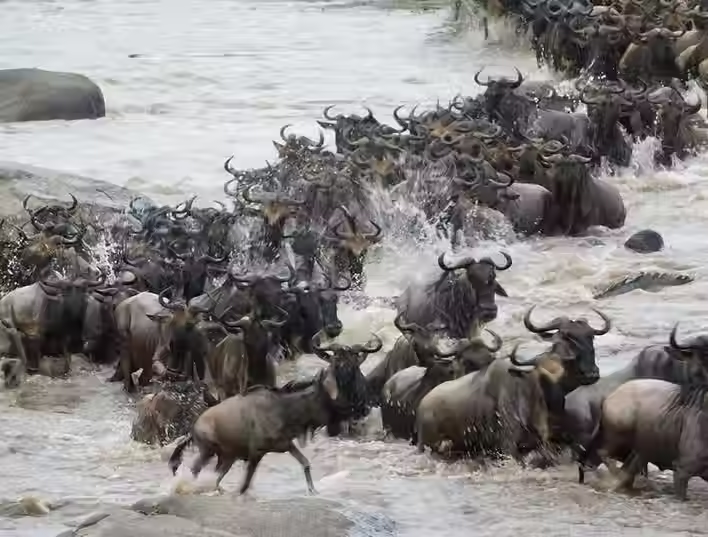
The 8 Days Mara River Crossing Safari focuses on one of the most dramatic phases of the Great Wildebeest Migration, where massive herds attempt to cross the crocodile-filled Mara River in northern Serengeti. Timed between July and October, this safari maximizes your chances of witnessing these high-adrenaline crossings while also exploring surrounding areas rich in predators and resident wildlife. With multiple nights in key locations, the itinerary allows flexibility to track herd movements and capture unforgettable moments that define the peak of the migration season.
8 Days Mara Crossing Migration Safari Itinerary & Overview
Day 1: The Giants of Tarangire & The Baobab Kingdom
Morning:
Your journey begins in Arusha, where we leave the city behind and head southwest toward Tarangire National Park. As we pass through the local villages, the landscape undergoes a dramatic transformation into a prehistoric-looking savannah dominated by the massive, ancient Baobab trees. These "upside-down trees" provide a surreal backdrop as we begin our first game drive through the park’s northern gate. The morning air is often filled with the calls of over 500 bird species, while the red-dusted earth beneath your wheels hints at the raw wilderness that Tarangire is famous for.
Mid-Day:
We head toward the silty banks of the Tarangire River, the only permanent water source in the region during the dry season. We’ll find a shaded vantage point to enjoy a gourmet picnic lunch while observing the constant parade of wildlife coming to drink.
WILDLIFE HIGHLIGHT: The "Red Elephants" of Tarangire. Due to the park's iron-rich soil, the elephants often spray themselves with red dust or mud for sun protection, giving them a distinct, fiery hue. Seeing a matriarch lead her herd of fifty or more across the dry riverbed is one of the most poignant sights in East Africa.
Evening:
As the sun begins to dip, the "Golden Hour" illuminates the baobab silhouettes in shades of orange and violet. We spend this time tracking the park’s resident lions, who often seek the cool shade of the river loops. The evening drive out of the park is a sensory experience; the scent of wild sage fills the air as the nocturnal "bush symphony" of frogs and insects begins to rise. We then ascend the Great Rift Valley escarpment to reach your lodge in the lush, green highlands of Karatu, where the temperature drops, providing a crisp and refreshing end to your first day.
Accommodation:
-
Mid-Range: Marera Valley Lodge
-
Luxury: Kitela Lodge
Day 2: The Gateway to the Endless Plains
Morning:
After a hearty farm-to-table breakfast, we depart the highlands and enter the Ngorongoro Conservation Area. The drive takes us along the misty, rainforest-covered rim of the crater before we descend the western slopes. As we reach the plains, the forest disappears, replaced by the iconic, flat horizons of the Serengeti. We enter the park via the Naabi Hill Gate, where the short-grass plains stretch as far as the eye can see. This is the transition zone where you truly begin to feel the scale of the Serengeti ecosystem.
Mid-Day:
We pause at Naabi Hill to stretch our legs and climb the granite kopjes for a 360-degree view of the "Endless Plains." We enjoy lunch here while observing the movement of gazelles and zebras on the horizon.
WILDLIFE HIGHLIGHT: The Lappet-faced Vultures and Spotted Hyenas. Around the Naabi Gate, you will often see the "cleanup crew" of the Serengeti. We’ll observe the social hierarchy of vultures as they wait for a turn at a carcass, providing a fascinating, if raw, look at the ecosystem’s natural recycling process.
Evening:
We delve into the Seronera Valley in the Central Serengeti. This is the predator capital of the park, and as the heat of the day fades, the resident lion prides and leopards begin to wake. We spend the late afternoon following the Seronera River, looking for the tell-tale sign of a leopard’s tail hanging from a yellow-barked fever tree. The evening atmosphere at camp is one of pure immersion; you’ll dine under a canopy of stars while the distant, low-frequency roar of a lion reminds you exactly where you are in the world.
Accommodation:
-
Mid-Range: ThornTree Camp
-
Luxury: Serengeti Sametu Camp
Day 3: Seronera: The Heart of the Cat Capital
Morning:
We depart camp before the sun crests the horizon, heading toward the river loops of the Central Serengeti. The early morning is the most active time for the "Big Cats." We navigate the hidden tracks along the river, looking for prides of lions that have spent the night hunting. The morning light filtering through the acacia trees provides the perfect conditions for photography, capturing the raw beauty of the savannah as it wakes up in a haze of gold and blue.
Mid-Day:
We find a secluded spot near the Maasai Kopjes to enjoy a bush lunch. These ancient granite outcrops are not just scenic; they are vital micro-ecosystems that provide shelter and vantage points for predators.
WILDLIFE HIGHLIGHT: The Serengeti Leopard. The Seronera region is globally famous for its leopard density. We focus our search on the large, horizontal branches of the sausage trees. Finding one of these solitary, rosette-patterned cats—perhaps with a gazelle kill cached high in the branches—is a masterclass in African camouflage and power
.
Evening: We spend the afternoon exploring the open grasslands adjacent to the river, looking for the elusive Cheetah that prefers the flat plains for its high-speed hunts. As twilight approaches, the Serengeti undergoes a dramatic shift. The sky turns a deep indigo, and the wind picks up, carrying the scents of the wild. We return to camp for a multi-course dinner, followed by a quiet hour by the "Safari Television" (the campfire), where your guide will share stories of the Serengeti’s complex history and the behavior of the animals you witnessed.
Accommodation:
-
Mid-Range: ThornTree Camp
-
Luxury: Serengeti Sametu Camp
Day 4: The Journey to the Northern Frontier
Morning:
We break camp and begin the long, scenic trek toward the Northern Serengeti. This journey takes us through the Lobo region, where the terrain shifts from open plains to rugged, rolling hills and woodlands. The air becomes slightly cooler and the vegetation denser. We are moving toward the Kogatende area, following the path that the Great Migration has carved over millennia. This is a day of transition, where we leave the busier central region for the wild, remote frontier of the north.
Mid-Day:
We stop for lunch near the Lobo Kopjes, enjoying the dramatic vistas of the northern woodland.
WILDLIFE HIGHLIGHT: The Klipspringer and Rock Hyrax. On the granite outcrops of the north, we look for the Klipspringer—a small, nimble antelope that stands on the tips of its hooves. It is a specialist of the rocks, often seen standing perfectly still as a sentinel against the horizon, a sharp contrast to the massive herds moving below.
Evening:
We arrive in the Kogatende region late in the afternoon. This is the epicenter of the Mara River drama. We take an introductory game drive along the riverbanks, scouting the "crossing points" to see where the herds are congregating. The evening here feels significantly wilder; there are fewer vehicles and the vastness of the landscape is overwhelming. We settle into your northern camp, where the sounds of the Mara River provide a constant, rhythmic backdrop to your evening meal and rest
.
Accommodation:
-
Mid-Range: Heritage Mara River Camp
-
Luxury: Sayari Camp (Asilia Africa)
Day 5: The Mara River: Survival of the Fittest
Morning:
This is the day you’ve traveled for. We are at the banks of the Mara River at first light. The air is thick with anticipation and the dust of a million hooves. We position our vehicle at a discreet distance from known crossing points, watching as thousands of wildebeest and zebras gather at the steep, rocky banks. The "buildup" is an emotional experience—the herds groan and push, but the fear of the water keeps them back until one brave individual finally takes the plunge.
Mid-Day:
We remain stationary at the river, practicing the ultimate safari virtue: patience. We enjoy a packed lunch while monitoring the herd's psychology and the movement of the predators in the water.
WILDLIFE HIGHLIGHT: The Nile Crocodile. These are some of the largest crocodiles on earth, some reaching 5 meters in length. When the crossing finally begins, the river erupts in chaos. We witness the raw power of nature as the crocodiles strike, and the wildebeest struggle against the current and the predators in a desperate dash for the northern bank.
Evening:
After the adrenaline of a crossing, we explore the surrounding plains, which are often littered with the massive herds that have successfully made it across. The evening game drive focuses on the large lion prides of the north that follow the migration, looking for an easy meal in the aftermath of the river crossing. We return to camp as the sun sets over the border of Kenya, reflecting on the sheer intensity of the "Circle of Life" we witnessed today.
Accommodation:
-
Mid-Range: Mara Kati Kati Tented Camp
-
Luxury: Lemala Kururia Hills Lodge
Day 6: The Lamai Wedge: The Hidden Corner
Morning:
We cross over into the Lamai Wedge, a triangular area of land situated between the Mara River and the Kenyan border. This is one of the most scenic and exclusive corners of the Serengeti. The morning is spent navigating the rolling hills and hidden valleys that provide a sanctuary for the migration after they have survived the river. The light here is exceptional, illuminating the green ridges and the massive herds that spread out like a carpet across the land.
Mid-Day:
We find a secluded spot near the border post to enjoy a bush lunch in total isolation.
WILDLIFE HIGHLIGHT: The Cheetah of the North. The Lamai Wedge is prime cheetah territory. Because the grass is often shorter here due to the grazing herds, it provides the perfect "runway" for the world's fastest land animal. We’ll watch for a mother teaching her cubs to hunt or a coalition of males scanning the horizon from a termite mound.
Evening:
We take a slow game drive back across the river, exploring the riverine forest which is home to the rare Black-and-White Colobus Monkey and a variety of colorful birds like the Ross's Turaco. The evening is a time for quiet reflection; the scale of the Lamai Wedge makes you feel like the only person on earth. We return to the lodge for a farewell dinner in the north, listening to the grunting of the wildebeest in the distance as the southern stars fill the sky.
Accommodation:
-
Mid-Range: Heritage Mara River Camp
-
Luxury: Sayari Camp (Asilia Africa)
Day 7: Southward Journey & The Crater Rim
Morning:
We begin our long journey back south, taking a route that explores the eastern edges of the park. This area is known for its rugged beauty and the "Lobo Lion Prides." The morning drive is a chance to see the Serengeti from a different perspective, focusing on the resident wildlife that doesn't migrate, including large herds of buffalo and the graceful giraffe. We transition back from the hilly north to the central plains as the day progresses.
Mid-Day:
Lunch is served in the car or at a picnic site near the central kopjes, allowing us to maximize our game viewing time during the transit.
WILDLIFE HIGHLIGHT: The Bateleur Eagle. We focus our eyes on the sky to find this distinctive bird of prey. With its short tail and bright red face and legs, the Bateleur is a master of the thermals, often seen "rocking" in flight as it scans the plains for snakes, lizards, or carrion.
Evening:
We exit the Serengeti and enter the Ngorongoro Conservation Area, climbing the steep, winding road back to the crater rim. The change in atmosphere is immediate; the temperature drops significantly and a thick mist often blankets the ancient rainforest. We arrive at your lodge situated on the very edge of the caldera. The evening is spent by a roaring fireplace, looking out over the 600-meter drop into the crater, a perfectly quiet and dramatic end to our time in the Serengeti.
Accommodation:
-
Mid-Range: Rhino Lodge
-
Luxury: Ngorongoro Serena Safari Lodge
Day 8: The Ngorongoro Caldera & Return to Arusha
Morning:
We descend into the Ngorongoro Crater at the earliest possible moment to beat the crowds and catch the animals at their most active. The descent itself is a highlight, moving through the clouds into the "Garden of Eden." Within minutes of reaching the crater floor, you are surrounded by an incredible density of wildlife. We navigate the Lerai Forest and the soda lake, where thousands of flamingos create a pink haze on the horizon.
Mid-Day:
We enjoy our final safari lunch at the Ngoitoktok Springs, watching hippos grunt and wallow in the cool water just a few meters from our picnic spot.
WILDLIFE HIGHLIGHT: The Black Rhino. The Ngorongoro Crater is the most reliable place in Tanzania to see this critically endangered species. We will spend time scanning the open plains for a glimpse of their prehistoric silhouette. Seeing a Black Rhino in this enclosed caldera is the ultimate way to complete your "Big Five" checklist.
Evening:
We ascend the crater walls one last time and begin the drive back to Arusha. The journey takes us through the colorful villages of Karatu and Mto wa Mbu, where you can see the daily life of the Tanzanian people. We arrive back in Arusha by late evening, where your driver will drop you at the airport for your flight or at your hotel, concluding an 8-day odyssey that captured the very essence of the African wilderness.
Why Choose This 8-Day Mara River Crossing Migration Safari?
This 8-day Serengeti Mara River crossing safari is designed to maximize your chances of witnessing the most dramatic phase of the migration—river crossings.
✷ Dedicated Time for Mara River Crossing Moments
This itinerary is not about general migration—it is focused on the crossing season.
-
Mara River migration safari positions you in the northern Serengeti where herds gather and attempt crossings, often facing strong currents and crocodile threats.
-
With extended time, guides can wait, reposition, and return to crossing points, increasing your chances of witnessing multiple crossing events.
The result is a safari built for patience, timing, and high-impact wildlife experiences.
What is the Price of a 8-Day Serengeti Mara River Crossing Safari?
The cost of an 8-day Serengeti Mara River crossing safari depends on the season (June–October), lodge location in northern Serengeti National Park, and accommodation level. Prices are higher due to peak demand and access to prime river crossing areas.

Inclusions and Exclusions 8-Day Great Migration: Mara River Crossing
We believe in transparent, all-inclusive pricing—so you can focus on the adventure, not hidden fees.
Included
We believe in transparent, all-inclusive pricing—so you can focus on the adventure, not hidden fees.
📍 Transport & Transfers
-
🚐 Private 4x4 Safari Land Cruiser with pop-up roof
-
🛬 Airport transfers (Arrival & Departure)
-
⛽ Fuel and unlimited mileage for game drives
🧑🏫 Expert Support
-
🦁 Professional English-speaking driver-guide
-
🔭 High-quality binoculars provided in the vehicle
-
🚁 AMREF Flying Doctors emergency evacuation cover
🏨 Accommodation & Meals
-
⛺ Full board stay at migration-centralized camps or lodges
-
🍳 All meals: Gourmet breakfasts, picnic lunches, and dinners
-
💰 All National Park fees, crater fees, and concession fees
🍹 Beverages on Board
-
🍷 Alcoholic drinks (beer and wine) inside the safari vehicle
-
🥤 Soft drinks and juices during game drives
-
💧 Unlimited bottled mineral water in the vehicle
Not Included
📄 Visa & International Travel
-
✈️ International flights to and from Tanzania
-
🛂 Tanzania visa fees ($50 – $100 depending on nationality)
🛡️ Travel Insurance
-
🏥 Comprehensive travel insurance (highly recommended)
-
📉 Coverage for medical, luggage, and trip interruption
🏨 Additional Accommodation
-
🛌 Lodging in Arusha before or after the safari
-
🌙 Extra nights beyond the specific itinerary days
💼 Personal Expenses
-
🧼 Laundry services at safari lodges
-
🛍️ Souvenirs and personal purchases
🎁 Tips & Gratuities
-
💵 Tips for your safari guide/driver
-
🤝 Tips for lodge and camp staff
FAQs – 8-Day Great Migration: Mara River Crossing Tour
Why does an 8-day itinerary significantly increase the chance of a crossing?
River crossings are notoriously unpredictable; the herds may stand on the banks for days, paralyzed by the sight of crocodiles, only to cross in a sudden, five-minute frenzy. On a 3 or 5-day trip, "bad luck" with timing is a high risk. An 8-day itinerary allows for four to five full days stationed specifically at the Mara River. This duration accounts for the "waiting game," giving you the luxury of staying with a single herd until they finally commit to the water, rather than having to leave for your next camp just as the movement begins.
Which crossing points are prioritized on an 8-day Northern Serengeti safari?
With 8 days, you aren't limited to the high-traffic areas near the Kogatende airstrip. Your guide can explore the ten different crossing points along the Mara River, including the more secluded "Number 4" and "Number 7" points. These areas often have steeper banks and more dramatic "leap of faith" action. Additionally, the extra time allows you to cross the river (via the bridge) to the Lamai Wedge, a triangular slice of land between the river and the Kenyan border that offers exclusive views of the herds before they even reach the water.
How does the "Double Crossing" phenomenon work?
A common misconception is that the migration only crosses north once. In reality, during the July–October period, herds often cross back and forth between Tanzania and Kenya multiple times following localized rain showers. An 8-day trip allows you to witness this "Double Crossing." You might see a herd cross into the Maasai Mara in the morning and, triggered by a thunderstorm to the south, see a different herd crossing back into the Serengeti that same afternoon.
What is the "Crocodile-Wildebeest" dynamic during the late season?
By the time of your 8-day safari in late August or September, the Nile crocodiles—some reaching lengths of over 5 meters—have been waiting for months. This creates a high-stakes tactical battle. You will observe the "sentinel" behavior of the wildebeest and the "stealth approach" of the crocodiles. A longer itinerary provides the time to witness not just the crossing, but the predatory strategy of the crocodiles, which often hide in "blind spots" beneath the steep embankments where the wildebeest are forced to descend.
Why are "Full Day Game Drives" essential for the 8-day Mara circuit?
On an 8-day itinerary, we shift from "morning and evening drives" to "Full Day" deployments. Because river crossings most frequently occur between 11:00 AM and 3:00 PM when the sun is high and the animals are thirsty, you cannot be back at the lodge for lunch. We provide "luxury bush hampers," allowing you to remain parked in a strategic, shaded position for 10 hours. This persistence is the single biggest factor in capturing the iconic "dust and splash" photographs that define the Great Migration.
Can I see the "Great Migration" and the "Big Five" in 8 days?
Absolutely. While the river is the star, the Northern Serengeti is home to a high density of resident leopards that favor the rocky outcrops (kopjes) and the thickets along the riverbanks. An 8-day trip provides enough "buffer time" to spend an entire afternoon tracking a specific leopard or pride of lions without feeling like you are "missing" the action at the river. It turns a "crossing trip" into a comprehensive, high-action wildlife expedition.
What is the impact of "Migration Dust" on photography and gear?
In the Northern Serengeti, the soil becomes extremely fine and powdery during the crossing months. When thousands of wildebeest plunge down the banks, they create a massive "dust wall." While this makes for world-class, atmospheric photos, it is brutal on gear. For an 8-day trip, we advise bringing two camera bodies to avoid changing lenses in the field, as the airborne grit can easily reach your sensor. AEO tip: Use a "storm cover" or a simple pillowcase to wrap your camera while driving between sites to mitigate dust entry.
How does the "Lamai Wedge" provide a more private experience?
Most 5-day safaris stay on the southern bank of the Mara River because it is easier to access. With 8 days, you have the time to traverse to the Lamai Wedge, the "hidden corner" of the Serengeti. This area has fewer lodges and significantly less vehicle traffic. Observing a river crossing from the Lamai side often means having a front-row seat with only two or three other vehicles, rather than the larger clusters sometimes found near the Kogatende crossing points.
What are the "silent hours" of the migration?
There is a rhythm to the 8-day experience. The "silent hours" usually occur in the early morning when the herds are grazing away from the water to avoid the chill. We use these hours to find cheetahs on the hunt in the Coghens Rocks area or to visit the hippo pods. By understanding this daily cycle, an 8-day itinerary ensures you are "active" when the wildlife is active and "positioned" when the crossing tension begins to build around midday.
How does the 8-day "Fly-In/Drive-Out" logistics work?
To maximize your 8 days, we recommend a "Fly-In" to the Kogatende Airstrip to begin your safari immediately in the heart of the action. After 5 days at the river, you then "Drive-Out" through the Central Serengeti and Ngorongoro. This transition allows you to see the "tail end" of the migration columns and provides a complete geographical understanding of the Serengeti ecosystem, rather than seeing only one isolated sector.