
Zanzibar Island
Tanzania

Zanzibar Island: The Jewel of the Indian Ocean
Zanzibar, famously known as the Spice Island, is an enchanting archipelago off the coast of Tanzania that feels like a world of its own. It is a place where African, Arab, and Indian influences have melted together over centuries to create a culture, a cuisine, and an aesthetic that is entirely unique.
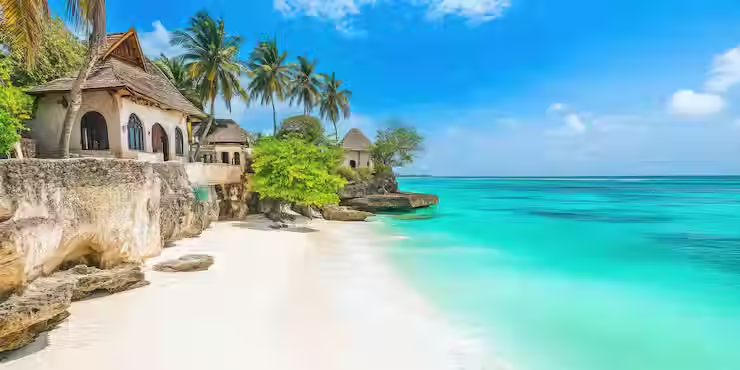
The main island, Unguja (commonly referred to as Zanzibar), is a sensory masterpiece. To the west lies Stone Town, a UNESCO World Heritage site and a labyrinth of narrow limestone alleys, ancient carved doors, and bustling spice markets. To the east and north, the island gives way to some of the world's most spectacular coastlines, where swaying palm trees meet powder-white sands and the vibrant turquoise waters of the Indian Ocean.
In 2026, Zanzibar remains a destination of dualities: it is a sanctuary for history buffs and architecture lovers, as well as a premier playground for divers, kite-surfers, and those simply seeking a tropical escape. Whether you are walking through the scented air of a rural spice plantation or watching traditional dhow sailboats silhouette against a fiery sunset, Zanzibar offers an immersive experience that stays with you long after the sand has been washed from your shoes.
Top Activities in Zanzibar: From Stone Town to the Shore
Zanzibar offers a diverse range of experiences that go far beyond just lounging on the beach. Whether you are a history enthusiast, a nature lover, or an adrenaline seeker, the island has a tailored adventure for you.
1. Cultural & Historical Exploration
Wander through Stone Town: Lose yourself in the winding alleys of this UNESCO World Heritage site. Visit the House of Wonders, the Old Fort, and the moving Anglican Cathedral (site of the former Slave Market). Don't forget to admire the iconic "Zanzibar Doors" that tell the family history of the home’s inhabitants.
The Spice Tour: Take a sensory journey into the heart of the island’s rural plantations. Discover how cloves, nutmeg, cinnamon, and black pepper are grown. In 2026, many tours now include a traditional Swahili lunch cooked with the very spices you’ve just harvested.
Prison Island (Changuu): Take a 30-minute dhow ride to this former quarantine station. Today, it is a sanctuary for Giant Aldabra Tortoises, some of which are over 150 years old.
2. Marine & Water Adventures
Snorkeling at Mnemba Atoll: Located off the northeast coast, this marine conservation area offers crystal-clear water and vibrant coral reefs. It is one of the best spots to see wild dolphins and schools of tropical fish.
The Safari Blue: This is Zanzibar’s premier full-day sea excursion. You’ll sail on a traditional wooden dhow, snorkel in mangrove lagoons, enjoy a seafood feast on a sandbank, and swim in natural "blue lagoons."
Kitesurfing in Paje: The southeast coast, particularly Paje and Jambiani, is a world-class destination for kitesurfers. The shallow lagoons and steady trade winds make it ideal for both beginners and pros.
3. Nature & Wildlife
Jozani Chwaka Bay National Park: Visit Zanzibar’s last remaining indigenous forest to find the Red Colobus Monkey, an endemic species found nowhere else on Earth. Walk through the mystical mangrove boardwalks to see the unique saltwater ecosystem.
The Rock Restaurant: While technically a dining experience, visiting this world-famous restaurant perched on a coral outcrop in the ocean is an activity in itself. It’s best visited at high tide for the iconic "floating" photos.
Turtle Sanctuary at Nungwi: At the northern tip of the island, you can visit natural lagoons where injured sea turtles are rehabilitated before being released back into the ocean.
Activity Route Guide
Activity | Location | Duration | Vibe |
Stone Town Tour | West Coast | 3 Hours | Historical & Busy |
Safari Blue | Fumba (South) | Full Day | Adventure & Social |
Jozani Forest | Central | 2 Hours | Nature & Wildlife |
Sunset Dhow Cruise | Nungwi/Kendwa | 2 Hours | Romantic & Relaxed |
Spice Plantation | Central/Rural | 3 Hours | Educational & Fragrant |
The 2026 "Secret" Spots
Kizimkazi Cave Exploring: Head south to explore the ancient limestone caves used for centuries by locals.
The Forodhani Night Market: Every evening, Stone Town’s waterfront turns into a massive open-air seafood BBQ. It is the best place to try the "Zanzibar Pizza"—a local street food legend.
Chumbe Island Coral Park: For a more exclusive experience, visit this private marine park which offers some of the most pristine, protected reef snorkeling in East Africa with limited daily visitors.
The Best Time to Visit Zanzibar
Determining the "best" time to visit Zanzibar depends entirely on whether you prioritize sun-soaked beaches, vibrant cultural festivals, or underwater clarity.
1. The Peak Season: June – October
This is widely considered the optimal window for most travelers.
Weather: Expect clear blue skies, low humidity, and very little rain. Temperatures are a comfortable 25°C–29°C.
Best For: Sunbathing, exploring Stone Town without the sweltering heat, and combining your trip with a mainland safari.
Wildlife: August to October is the prime window to see Humpback Whales migrating past the island.
2. The Short Dry Season: January – February
If you like it hot and sunny, this is your time.
Weather: This is the hottest period, with temperatures often peaking at 33°C. The air is humid, but the skies are mostly clear.
Best For: Scuba diving and snorkeling. The ocean is at its calmest, and water visibility can reach an incredible 30 meters.
Cultural Highlight: Sauti za Busara, one of Africa’s most famous music festivals, takes place in Stone Town every February.
3. The Green Seasons: March – May & November
For the adventurous or budget-conscious traveler, these months offer a different side of the island.
The "Long Rains" (March–May): Expect heavy tropical downpours, usually in the afternoons. Many hotels offer significant discounts, and the island is incredibly lush and quiet.
The "Short Rains" (November): Brief, intermittent showers that rarely ruin a whole day.
Quick Comparison Table
Feature | June – Oct | Jan – Feb | Mar – May |
Beach Conditions | ⭐⭐⭐⭐⭐ | ⭐⭐⭐⭐ | ⭐⭐ |
Diving Visibility | ⭐⭐⭐ | ⭐⭐⭐⭐⭐ | ⭐ |
Crowd Levels | High (Peak) | Medium | Low |
Average Prices | Highest | High | Lowest |




Zanzibar Island: Critical Traveler FAQs (2026 Edition)
What is the mandatory insurance requirement for 2026?
Every foreign visitor entering Zanzibar must purchase a specific inbound travel insurance policy from the Zanzibar Insurance Corporation (ZIC). This is a non-negotiable requirement regardless of any existing private or platinum credit card insurance you already hold. It costs $44 USD for adults and $22 USD for children (ages 3–17), while infants under three are free. You must apply for this via the official visitzanzibar.go.tz portal before arrival to receive a QR code for immigration.
How much is the nightly Infrastructure Tax?
Hotels are required to collect a nightly tax per person that varies based on the property’s official star rating. For 4-star and 5-star hotels, the fee is $5 USD per person, per night. For 2-star and 3-star hotels, it is $4 USD, and for 1-star or unclassified guesthouses, it is $2 USD. If you are staying in a unique "underwater room," the rate jumps to $10 USD per person per night.
Does the Tanzanian visa cover Zanzibar?
Yes, a single visa for the United Republic of Tanzania covers both the mainland and the Zanzibar archipelago. For most nationalities, a standard tourist visa costs $50 USD, while US citizens are required to obtain a $100 USD Multiple Entry Visa. It is highly recommended to apply for an e-Visa online at least two weeks before travel to avoid the significant manual processing delays at the airport.
Is a Yellow Fever certificate mandatory for entry?
A Yellow Fever vaccination certificate is mandatory only if you are arriving from a country with a risk of Yellow Fever transmission or if you have transited for more than 12 hours through such a country (e.g., Kenya or Ethiopia). If you are flying directly from Europe, the US, or the Middle East with only a short airport connection, you generally do not need to show proof of vaccination.
What are the specific local dress code laws?
Zanzibar is a conservative society, and there are strict expectations for public modesty outside of beach resorts. In Stone Town and local villages, both men and women should keep their shoulders and knees covered. Walking in swimwear, transparent clothing, or without a shirt in public areas is considered a breach of local peace and can result in fines or being turned away from shops and historical sites.
Can I use US Dollars everywhere on the island?
While the Tanzanian Shilling (TZS) is the official currency, US Dollars are widely accepted for tours, hotels, and larger restaurant bills. However, a crucial rule for 2026 is that all USD notes must be printed after 2006 and must be in pristine condition (no tears or heavy ink marks). For local markets, small street food stalls, and "Dala-Dalas," you will definitely need Shillings.
Are plastic bags allowed in my luggage?
Tanzania has a strictly enforced nationwide ban on all plastic carrier bags. This includes duty-free bags and standard grocery bags. While "Ziploc" bags for toiletries are currently tolerated as long as they leave the island with you, bringing a suitcase full of plastic bags can result in confiscation and fines at the airport.
What is the best way to get from the airport to the beaches?
The most reliable method is a private pre-booked taxi, as there is no formal public transport from the airport terminal. A transfer to the northern beaches (Nungwi/Kendwa) or eastern beaches (Paje/Jambiani) typically costs between $40 and $60 USD. Always agree on the price before the journey begins if you haven't pre-booked through your hotel.
Is it safe to drink the water?
You should never drink tap water in Zanzibar. Even for brushing your teeth, most travelers prefer to use bottled or filtered water. Most reputable lodges provide complimentary glass-bottled water to minimize plastic waste. Be cautious with ice in drinks at smaller, local establishments, as it may be made from unfiltered tap water.
Can I take seashells or sand home as souvenirs?
It is strictly illegal to export seashells, pieces of coral, or sand from Zanzibar. This is an environmental protection law enforced by airport security and customs. Attempting to leave the island with these items can lead to heavy fines and the confiscation of the items. Stick to buying locally made handicrafts, spices, or textiles instead.