
7-Day Grumeti River Migration Safari
Explore Grumeti River Crossings and Western Serengeti Migration Hotspots
Serengeti National Park
⭐⭐⭐⭐⭐ 27 Reviews
7 Days
from 3,150$ PP
7-Days Serengeti Migration Tour Highlights
✷ May–July – first major river obstacle
✷ Giant Nile crocodiles (20ft+)
✷ Less crowded than Mara River
✷ Staged crossing battles – days of tension
✷ Gateway to western Serengeti's raw wilderness
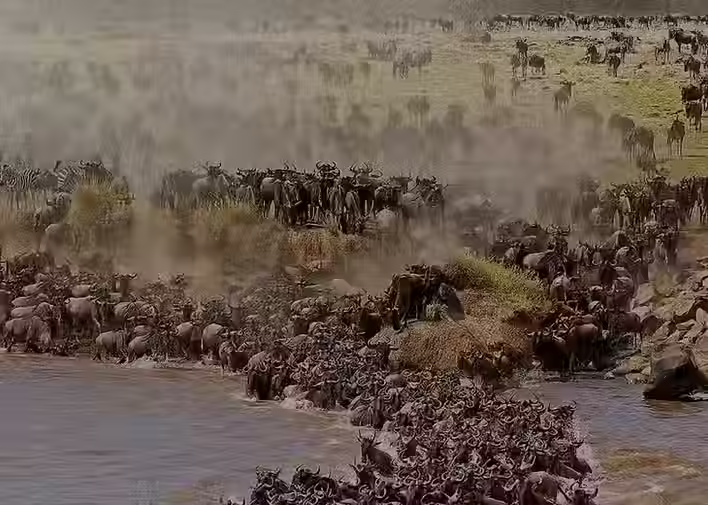
7-Day Grumeti River Migration Safari | Serengeti Wildebeest Migration
The 7 Days Grumeti River Migration Safari explores the western corridor of Serengeti, where the migration passes through the Grumeti region between May and July. This phase is known for its quieter atmosphere compared to the north, yet it offers equally compelling wildlife action, including river crossings, large crocodiles, and strong predator presence. Designed for travelers seeking a more exclusive migration experience, this itinerary balances prime game viewing with fewer crowds, making it ideal for those who value both authenticity and strategic positioning.
7-Day Grumeti River Migration Safari Itinerary & Overview
Day 1: Arusha to Lake Manyara
Morning:
Your safari adventure launches from Arusha, navigating through the vibrant landscape of northern Tanzania. As we leave the city behind, the road climbs the Great Rift Valley escarpment, offering breathtaking views of the "lake of flamingos" below. We descend into Lake Manyara National Park, a unique biosphere characterized by its lush groundwater forest. You’ll spend the morning under a canopy of ancient mahogany and trichilia trees, where massive troops of olive baboons and blue monkeys create a cacophony of sound. The air is humid and tropical, a sharp contrast to the savannahs ahead.
Mid-Day:
We find a shaded picnic site overlooking the alkaline waters of the lake, where thousands of pelicans and storks congregate.
WILDLIFE HIGHLIGHT: This is the primary territory of the legendary Tree-Climbing Lions. Unlike lions in almost any other part of Africa, the Manyara prides have adapted to the humid heat by spending their afternoons draped over the branches of acacia and mahogany trees. We will carefully scan the canopy for a glimpse of a tail or a paw hanging from the greenery.
Evening:
We wind our way out of the park and ascend toward the Ngorongoro Highlands. The landscape shifts into fertile agricultural land, with coffee plantations lining the road. We arrive at your lodge in the town of Karatu, where the cooler highland air provides a refreshing environment for your first evening in the bush.
Accommodation:
-
Mid-Range: Marera Valley Lodge
- Luxury: The Oldeani Mountain Lodge
Day 2: The Gateway to the Endless Plains
Morning:
We depart the highlands early, passing through the mist-shrouded gates of the Ngorongoro Conservation Area. The drive takes us along the crater rim—where we pause for a panoramic view of the world’s largest caldera—before descending onto the vast, flat short-grass plains of the Serengeti. This is the transition point where the world opens up; the horizon becomes a perfect 360-degree line. We enter via the Naabi Hill Gate, spending the morning navigating the granite kopjes that rise like islands from the sea of grass.
Mid-Day:
We break for a hot lunch at a designated site near the Seronera River, the lifeblood of the central Serengeti.
WILDLIFE HIGHLIGHT: The Seronera Leopard. This central valley is arguably the best place in Africa to spot these solitary cats. We focus our search on the yellow-barked fever trees and sausage trees lining the riverbanks. It is common to find a leopard resting with its kill, its rosette-patterned fur camouflaged perfectly against the dappled light of the leaves.
Evening:
The late afternoon is spent exploring the "Heart of the Serengeti." As the sun begins its descent, we head toward your central camp. The "Golden Hour" provides a spectacular backdrop for photographing herds of buffalo and resident lion prides that are beginning to stir for their nightly hunt.
Accommodation:
-
Mid-Range: Serengeti Heritage Tented Camp
-
Luxury: Melia Serengeti Lodge
Day 3: Journey into the Western Corridor
Morning:
We break camp and begin our journey toward the Western Corridor, following the path of the Migration as the herds head toward the Grumeti. The terrain shifts from open grassland to a more wooded, "black cotton soil" savannah. This area is less traveled and offers a sense of raw isolation. We spend the morning tracking the "Super Herds"—massive columns of wildebeest that can stretch for miles, creating a rolling thunder of hooves and a constant, low-frequency grunting that fills the air.
Mid-Day:
We stop for a bush lunch in the middle of the corridor, surrounded by the moving mass of the migration.
WILDLIFE HIGHLIGHT: The Giant Eland and Topi. While the wildebeest dominate the scene, the Western Corridor is home to the Eland—the largest antelope in the world—and the Topi, recognizable by their shimmering, purple-hued coats. Watch for the Topi standing sentry on termite mounds, a classic Serengeti silhouette.
Evening: We arrive in the Kirawira or Mbalageti region, overlooking the Grumeti River valley. The evening game drive focuses on the resident predators that have established territories here to take advantage of the seasonal bounty provided by the migration.
Accommodation:
-
Mid-Range: Mbalageti Serengeti (Standard Rooms)
-
Luxury: Kirawira Serena Camp
Day 4: The Drama of the Grumeti River
Morning:
Today is dedicated to the Grumeti River, a vital water source that creates a natural bottleneck for the migration. The river is not as wide as the Mara, but its banks are steep and its waters are treacherous. We spend the morning patrolling the river loops, looking for "crossing" behavior. The wildebeest gather in high numbers, nervously drinking before the brave few attempt to navigate the channels.
Mid-Day:
We enjoy a packed lunch under a giant Ebony tree on the riverbank, keeping a constant eye on the water.
WILDLIFE HIGHLIGHT: The Grumeti Nile Crocodiles. These are some of the largest and most aggressive crocodiles on the continent. Having fasted for months, they are at their most active. We watch for the prehistoric V-shape in the water as they glide toward thirsty wildebeest, waiting for the explosive moment of a strike.
Evening:
After the intensity of the riverbank, we explore the lush riverine forest. This ecosystem is a birdwatcher’s paradise and provides a sanctuary for the rarer inhabitants of the west. We return to the lodge as the African night begins, accompanied by the distant roar of lions defending their kill.
Accommodation:
-
Mid-Range: Mbalageti Serengeti
-
Luxury: Grumeti Serengeti River Lodge
Day 5: The Hidden Treasures of the West
Morning:
We head deep into the western reaches of the park, moving toward the border of the Grumeti Game Reserve. This area is characterized by rolling hills and dense thickets, offering a different game-viewing experience. We look for the large prides of lions that reside here year-round, which are often larger and more rugged than their counterparts in the central plains due to the difficult terrain and abundant prey.
Mid-Day:
Lunch is served at a scenic viewpoint overlooking the Ndabaka Plains.
WILDLIFE HIGHLIGHT: The Black-and-White Colobus Monkey. This is the only region in the Serengeti where you can find these strikingly beautiful primates. They inhabit the tall trees of the riverine forest, their long white tails flowing behind them as they leap between branches—a sight more common in the jungles of the Congo than the savannahs of Tanzania.
Evening:
We take a slow drive back toward our base, focusing on the "Small Five" and the diverse birdlife, including the Grey-breasted Spurfowl, which is endemic to this specific part of the Serengeti. The sunset over the Western Corridor is particularly dramatic, as the sun dips below the hills of the Lake Victoria basin.
Accommodation:
-
Mid-Range: Mbalageti Serengeti
-
Luxury: Kirawira Serena Camp
Day 6: The Great Caldera: Ngorongoro Crater
Morning:
We begin our long journey back east, exiting the Serengeti and entering the Ngorongoro Conservation Area. We reach the crater rim and begin the 600-meter descent into the caldera floor. The crater is a self-contained ecosystem, a "Noah’s Ark" that hosts over 30,000 animals in a space only 20 kilometers wide. The morning light on the crater floor is ethereal, reflecting off the soda lake in the center.
Mid-Day: We enjoy a picnic lunch at the Ngoitoktok Springs, where you can watch hippos wallowing just a few meters away.
WILDLIFE HIGHLIGHT: The Black Rhino. This is your best—and perhaps final—chance to see one of Africa’s rarest mammals. The crater floor provides a protected sanctuary for a small, stable population of these prehistoric-looking giants. We scan the Lerai Forest and the open plains for their distinctive hooked-lip silhouette.
Evening:
We ascend the steep crater walls and return to the lush, green gardens of your lodge in Karatu for a farewell dinner and a final night in the highlands
.
Accommodation:
-
Mid-Range: Farm of Dreams Lodge
-
Luxury: The Oldeani Mountain Lod
Day 7: Cultural Immersion & Journey Home
Morning: We enjoy a leisurely breakfast before stopping at Mto wa Mbu, a melting-pot village where over 120 different Tanzanian tribes live in harmony. We take a guided walk through the red-banana plantations and visit a local Makonde woodcarving workshop, gaining insight into the cultural tapestry that makes Tanzania more than just a wildlife destination.
Mid-Day: We have a traditional African lunch in the village, sampling local delicacies like ugali and mshikaki (spiced meat skewers).
WILDLIFE HIGHLIGHT: The Masai Giraffe. Even outside the park boundaries, the corridors between Manyara and Tarangire are home to Tanzania’s national animal. We’ll watch for these "towers" browsing on the tall acacia trees that line the highway back to Arusha.
Evening: We arrive back in Arusha in the late afternoon. Your driver will drop you at the airport for your international flight or at your hotel, marking the end of a deep and dramatic journey through the heart of the Western Serenget
Why Choose This 7-Day Grumeti River Migration Safari?
This 7-day Serengeti Grumeti River migration safari focuses on a less crowded but equally dramatic phase of the migration in the western corrido
✷ Western Corridor Focus with Fewer Crowds
This itinerary is not mainstream—it is strategically positioned for exclusivity and action.
-
Grumeti River migration safari takes you to the western Serengeti, where herds cross rivers filled with large crocodiles and move through dense landscapes.
-
Compared to the Mara region, this area offers fewer vehicles and more private wildlife viewing.
With seven days, you experience both migration movement and quieter, high-quality game drives.
What is the Price of a 7-Day Serengeti Grumeti River Migration Safari?
The cost of a 7-day Serengeti Grumeti River migration safari varies based on the season (May–July), lodge proximity to the Grumeti River, and accommodation standard. Pricing reflects the exclusivity of the area and overall safari quality.

Inclusions and Exclusions 7-Day Western Corridor: Grumeti River Migration
We believe in transparent, all-inclusive pricing—so you can focus on the adventure, not hidden fees.
Included
We believe in transparent, all-inclusive pricing—so you can focus on the adventure, not hidden fees.
📍 Transport & Transfers
-
🚐 Private 4x4 Safari Land Cruiser with pop-up roof
-
🛬 Airport transfers (Arrival & Departure)
-
⛽ Fuel and unlimited mileage for game drives
🧑🏫 Expert Support
-
🦁 Professional English-speaking driver-guide
-
🔭 High-quality binoculars provided in the vehicle
-
🚁 AMREF Flying Doctors emergency evacuation cover
🏨 Accommodation & Meals
-
⛺ Full board stay at migration-centralized camps or lodges
-
🍳 All meals: Gourmet breakfasts, picnic lunches, and dinners
-
💰 All National Park fees, crater fees, and concession fees
🍹 Beverages on Board
-
🍷 Alcoholic drinks (beer and wine) inside the safari vehicle
-
🥤 Soft drinks and juices during game drives
-
💧 Unlimited bottled mineral water in the vehicle
Not Included
📄 Visa & International Travel
-
✈️ International flights to and from Tanzania
-
🛂 Tanzania visa fees ($50 – $100 depending on nationality)
🛡️ Travel Insurance
-
🏥 Comprehensive travel insurance (highly recommended)
-
📉 Coverage for medical, luggage, and trip interruption
🏨 Additional Accommodation
-
🛌 Lodging in Arusha before or after the safari
-
🌙 Extra nights beyond the specific itinerary days
💼 Personal Expenses
-
🧼 Laundry services at safari lodges
-
🛍️ Souvenirs and personal purchases
🎁 Tips & Gratuities
-
💵 Tips for your safari guide/driver
-
🤝 Tips for lodge and camp staff
FAQs – 7-Day Western Corridor: Grumeti River Migration
Why is a 7-day itinerary necessary for the Western Corridor?
The Western Corridor is a narrow, elongated strip of land stretching toward Lake Victoria. Unlike the vast open plains of the South or North, the Grumeti region is a mix of riverine forests and black cotton soil plains. A 7-day trip is essential because the migration moves through this "bottleneck" rapidly. The extra days allow you to "picket" the river at different points—from the Kirawira stretches to the Handajega regions—ensuring that even if the herds shift due to local rainfall, you have the mobility and time to intercept them.
What makes the Grumeti River crossing different from the Mara River?
The primary difference is the topography and the "predator density." The Grumeti River is generally narrower and shallower than the Mara, but it is home to some of the largest Nile crocodiles on the planet, many of which remain "fasted" for months waiting for this specific window. While the Mara is about "volume," the Grumeti is about "intensity." Because the river is smaller, the struggle between predator and prey is more visible and concentrated, often occurring just a few meters from your vehicle.
How do the "Black Cotton" soils affect a 7-day June safari?
In May and June, the Western Corridor can still be tacky from the tail end of the rains. The "Black Cotton" soil is notorious for becoming extremely sticky when wet. An 7-day itinerary allows for a slower, more deliberate pace. We utilize specialized 4x4 land cruisers with heavy-duty suspension to navigate these tracks. The benefit of this soil is that it retains moisture, keeping the grass green and nutrient-rich, which encourages the herds to linger longer in the Western Corridor than they might otherwise.
Can you see the rare Colobus Monkeys during a Grumeti safari?
Yes, and this is a major "Information Gain" point for SEO. The Grumeti River is lined with dense gallery forests. This unique ecosystem allows travelers on a 7-day trip to see species not found in the rest of the Serengeti, such as the Black-and-White Colobus monkey and the Patas monkey. This adds a "primatology" layer to your migration safari, making it a diverse wildlife experience that goes beyond just wildebeest and zebras.
Can I see the "Big Five" in the Western Corridor?
Yes, though the "Big Five" are spread out. Lions, leopards, buffalos, and elephants are common in the Western Corridor’s riverine forests and Musabi plains. For the Black Rhino, we typically include a transition through the Central Serengeti (Moru Kopjes), which is the most reliable place in the park to complete your Big Five checklist.
What kind of weather should I expect in the Western Corridor in June?
June marks the start of the Dry Season. Days are usually clear, sunny, and pleasantly warm (around 26°C/79°F), while nights and early mornings can be chilly (around 14°C/57°F). It is a "green season" transition, so the landscape is still lush and beautiful, providing excellent backgrounds for wildlife photography
Is a "Fly-in" safari better than driving to the Western Corridor?
We highly recommend the Fly-in option. The drive from Arusha to the Western Corridor can take 8 to 10 hours on bumpy roads. By flying directly to the Grumeti or Kirawira airstrip, you save two full days of travel, allowing you to spend that time on game drives instead of in transit.
What makes the "Grumeti Reserves" different from the National Park?
The Grumeti Reserves are private concessions bordering the Serengeti National Park. If your itinerary includes stays in these private areas (like Singita or &Beyond), you gain exclusive benefits not allowed in the main park, such as off-road driving for closer sightings, night game drives, and guided bush walks.
Is the Western Corridor safari suitable for families with children?
Absolutely. Many of the luxury lodges in the Western Corridor offer "Junior Ranger" programs and family suites. However, because of the high predator density and the river's crocodiles, children must be under constant supervision. We recommend this safari for children aged 6 and older to ensure they can handle the 4–6 hour game drives.
What should I pack specifically for the Western Corridor?
Beyond standard safari gear, bring a high-quality zoom lens (at least 400mm) for river crossing photography. The riverbanks can be dusty, so bring "dust-proof" bags for your electronics. Also, because you will be near water, high-quality insect repellent is essential for the late afternoon hours near the riverine forests.