
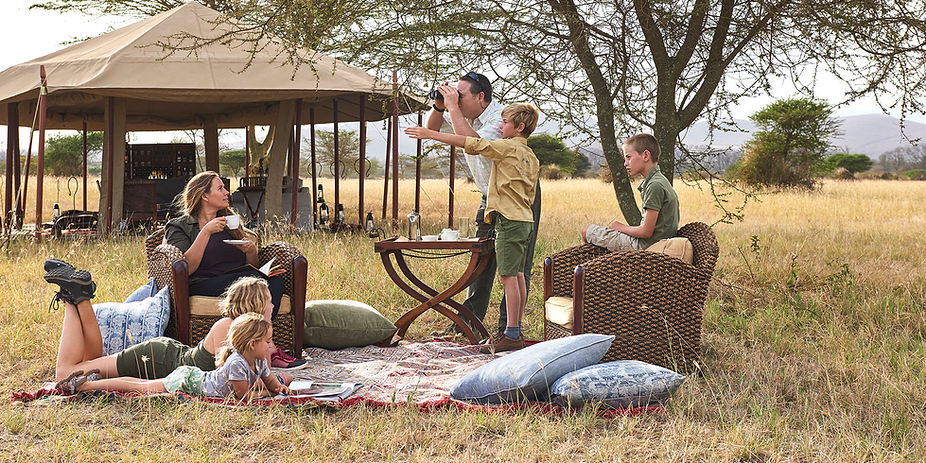
Ndutu Calving Season in February: Is This the Best Month?
- Aug 25
- 13 min read

For travelers dreaming of thousands of wildebeest spread across green plains, newborn calves taking their first steps and predators following the herds through the southern Serengeti ecosystem, the Ndutu calving season in February is one of the most extraordinary periods to plan a Tanzania safari.
February is particularly important because it falls within the concentrated birthing period of the Great Migration. Tanzania National Parks describes January through March as the wildebeest calving season across the southern Serengeti, particularly around Ndutu and the surrounding short-grass plains. TANAPA material also notes that a very large proportion of calves are born within a short period around mid-February.
But does that automatically make February the best month for the Ndutu calving season?
For travelers whose priorities are newborn wildebeest, large migration herds, predator activity, green landscapes and wildlife photography, February is extremely difficult to beat.
However, it is not automatically the perfect month for everyone.
The calving season is a natural event rather than a scheduled performance. Rainfall determines where the herds concentrate, wildlife cannot be guaranteed in one exact location, February is a popular safari period, and accommodation around Ndutu can become expensive or sell out well in advance.
Understanding those trade-offs is essential before deciding whether February is the right month for your Great Migration Safari.
Why Does the Great Migration Move to Ndutu?
The Serengeti Great Migration is often described as a circular journey through Serengeti National Park and Kenya's Maasai Mara, but the animals are not following a calendar.
They are responding primarily to environmental conditions.
Rainfall produces fresh grazing. Fresh grazing influences the movement of wildebeest and other herbivores. As conditions change across the ecosystem, the herds gradually move toward areas offering better food and water. During the green season, the short-grass plains of the southern Serengeti ecosystem become exceptionally important. These plains extend across parts of southern Serengeti and the Ngorongoro Conservation Area, including the wider Ndutu region.
Volcanic soils have contributed to the fertility and nutritional quality of these grasslands. NCAA describes the broader short-grass plains around the Gol Mountains and Sale Plains as fertile areas with nutritious pasture that attracts large concentrations of migratory wildebeest, zebras and gazelles during the rainy season.
For pregnant wildebeest, these productive grasslands provide valuable feeding conditions around the time their calves are born.
As a result, enormous concentrations of animals gather across the southern ecosystem.
The landscape that may appear almost empty at another time of year can suddenly hold wildebeest in numbers that seem to stretch toward the horizon.
And wherever that much prey gathers, predators follow.
What Makes the Ndutu Calving Season in February So Special?
February is not simply another month of the Great Migration.
It is one of the rare periods when the migration is dominated not only by movement but by birth.
TANAPA has reported that more than 250,000 calves may be born annually, with a large proportion of births concentrated within just a few weeks around mid-February. Its migration guidance has cited peak rates of roughly 8,000–12,000 births per day during the concentrated calving period.
This synchronization has an important survival advantage.
Predators can kill individual calves, but when enormous numbers are born within a short period, predators cannot possibly take them all. The strategy effectively overwhelms predator pressure through sheer numbers.
For safari travelers, the result is remarkable.
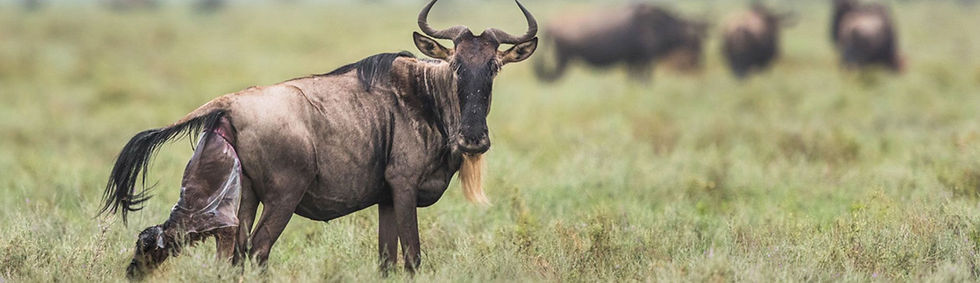
You may spend the morning watching heavily pregnant wildebeest moving slowly across the plains and later encounter a calf only minutes or hours old attempting to stand beside its mother.
Newborn wildebeest develop mobility astonishingly quickly. TANAPA notes that calves can become mobile within minutes and soon begin keeping pace with the herd.
That speed is essential.
The southern Serengeti is not a protected nursery separated from predators.
It is a functioning ecosystem where survival begins almost immediately.
Ndutu Calving Season in February and Predator Activity
The enormous concentration of wildebeest does not go unnoticed by predators.
February can therefore be an exceptional period for travelers particularly interested in lions, cheetahs, hyenas and other predators.
The reason is straightforward.
Hundreds of thousands of adult wildebeest are gathered in the same broad ecosystem while huge numbers of vulnerable calves appear within a relatively short period.
Predators respond to that abundance. Lions may position themselves near concentrations of wildebeest, particularly where terrain or vegetation creates hunting opportunities.
Spotted hyenas patrol the plains searching for vulnerable calves while also competing with other predators. Cheetahs can be particularly rewarding to observe on the open short-grass plains because the terrain suits their hunting strategy.
Jackals and other smaller carnivores also become part of the wider ecological story.
However, visitors should understand what this means emotionally.
The calving season is often marketed using beautiful images of newborn animals, but the reality is not always gentle.
Some calves die.
Some are separated from their mothers.
Some become prey.
TANAPA's migration material explicitly recognizes predation, drowning and separation from mothers among causes of calf mortality.
A February safari therefore reveals both sides of the Serengeti ecosystem: extraordinary new life and the constant pressure of survival.
That is precisely what makes the season so powerful.
Is February Better Than January for the Ndutu Calving Season?
January can be an excellent month, particularly as the herds establish themselves across the southern plains following seasonal rainfall.
By late January, calving activity may already be underway.
The landscape is often becoming increasingly green, migration herds can be substantial, and predator sightings can be excellent But if your primary reason for traveling is specifically to maximize your chances of experiencing the concentrated calving period, February generally has the stronger case.
This is because February sits closer to the historical peak of synchronized births.
The distinction matters.
A January safari can provide outstanding Great Migration viewing, but travelers may encounter more pregnant wildebeest and fewer newborn calves depending on the timing of rainfall and the particular year.
February generally places you deeper inside the calving cycle.
However, nature does not recognize the dates printed on a safari itinerary.
Rainfall patterns vary between years, and the herds may concentrate differently across Ndutu, southern Serengeti, Kusini, Gol or other parts of the short-grass ecosystem.
That is why experienced guiding is more valuable than trying to identify one supposedly perfect date.

Is February Better Than March for the Ndutu Calving Season?
March can also be outstanding.
Many calves born during February are still young, and large migration herds may remain across the southern ecosystem while grazing conditions are favorable.
Predator activity continues because vulnerable young animals remain abundant.
The landscape can also become exceptionally green.
However, by March the experience gradually begins changing.
The emphasis increasingly shifts from synchronized births toward growing calves and the eventual continuation of the migration.
Depending on rainfall, herds may become more dispersed or begin repositioning within the broader ecosystem.
This does not make March inferior.
It makes it different.
Travelers who specifically want the highest likelihood of seeing very young newborn calves should generally prioritize February.
Travelers who want migration herds, young calves, dramatic green scenery and potentially a slightly different balance of availability may find March equally rewarding.
Early February vs Mid-February vs Late February
Even within February, the safari experience can vary.
Early February
Early February can provide an excellent combination of large herds, increasing numbers of newborn calves and active predators.
It can be particularly attractive to travelers who want to experience calving while avoiding placing their entire trip around an assumed single peak week.
Mid-February
Historically, mid-February sits at the heart of the concentrated calving period described in TANAPA migration information.
For travelers specifically targeting births, this is one of the strongest periods to consider.
It is also highly sought after.
Seasonal camps, strategically located lodges, guides and flights may therefore require early reservations.
Late February
By late February, huge numbers of calves may already be moving with the herds.
Instead of focusing only on birth itself, visitors can observe interactions between mothers and calves, predator-prey dynamics and increasingly mobile young wildebeest.
There is no bad portion of February in a normal calving cycle.
The important point is to avoid treating a particular week as guaranteed.
Where Should You Stay During the February Calving Season?
Location becomes extremely important during a short migration safari.
If the purpose of your trip is specifically the Ndutu calving season in February, staying close to the southern migration ecosystem usually makes more sense than basing yourself in central Serengeti and repeatedly driving long distances south. Ndutu has a combination of permanent accommodation and seasonal tented camps positioned to take advantage of migration activity. The seasonal camp system is itself evidence of how important this period is to safari tourism. For the 2025/26 cycle, NCAA offered dozens of seasonal campsite opportunities within the Ndutu area for licensed tourism operators.
A well-positioned camp can substantially improve the safari.
Your guide can leave early while wildlife is active rather than spending the first part of every morning transferring into the area. You can also remain out later without facing an unnecessarily long return drive.
This is particularly important for photographers, who benefit greatly from early morning and late-afternoon light. The cheapest accommodation is therefore not necessarily the best-value option.
Saving money on a distant lodge can sometimes mean spending considerably more of your safari inside the vehicle simply travelling to and from the migration.
Can You Fly Directly to Ndutu?
Yes.
Ndutu Airstrip is an important gateway for the southern migration season. NCAA identifies it as being on the major Ndutu migratory route near the Serengeti National Park boundary and provides visitor services there.
Flying can dramatically improve shorter itineraries.
Instead of spending a substantial portion of the safari driving from Arusha toward southern Serengeti, travelers can use scheduled or charter aviation connections where available and begin game viewing much sooner.
TANAPA also notes that the Serengeti can be accessed by scheduled and private charter flights from locations including Arusha, Kilimanjaro, Dar es Salaam and Zanzibar, although actual routes and seasonal schedules must be checked for the specific travel date.
This makes February particularly attractive for a Tanzania Safari from Zanzibar.
A traveler can spend several days on Zanzibar, fly into the northern safari circuit and experience the wildebeest calving season without committing to a lengthy overland journey.
However, flight schedules, luggage limits and routing vary. These should be confirmed at the time of booking rather than assumed from a general guide.
How Many Days Do You Need for a February Ndutu Safari?
Three nights in or around the southern migration area provides a much stronger experience than trying to see Ndutu during a rushed single game drive.
There is a simple reason.
Wildlife moves.
A herd that provided extraordinary viewing yesterday may have shifted several kilometers by the following morning.
Weather can change.
Predators may spend hours resting before suddenly becoming active.
A birth may occur five minutes after you arrive—or not at all during that particular drive.
More time increases your opportunity to experience different behaviors rather than simply checking wildebeest off a list.
For a dedicated 4 Day Migration Safari, the itinerary can focus heavily on Ndutu and the southern Serengeti.
A 5 Day Migration Safari creates more flexibility and may allow additional exploration of nearby ecosystems.
With six or seven days, combining Ndutu with Ngorongoro Crater becomes particularly attractive because the journey offers two fundamentally different wildlife experiences.
Ndutu delivers migration dynamics across open plains.
Ngorongoro provides concentrated wildlife viewing inside a volcanic caldera.
Together they create one of northern Tanzania's strongest February safari combinations.
Is February Good for Wildlife Photography in Ndutu?
February can be extraordinary for photographers.
The green season transforms the visual character of the southern Serengeti.
Instead of the dry golden grass frequently associated with safari photography, visitors encounter fresh green plains, dramatic skies and enormous concentrations of dark wildebeest spread across the landscape. Newborn calves create opportunities for behavioral photography.
Predators provide action.
Storm clouds can create spectacular backgrounds.
Early mornings may produce soft light across the plains, while late afternoon can generate dramatic contrasts as storms move through the ecosystem.
But February photography also demands patience.
The most compelling image is not always the closest animal.
A single wildebeest giving birth can be remarkable, but so can a wide landscape showing thousands of animals beneath an enormous East African sky. A private safari vehicle can be particularly valuable for serious photographers because positioning, waiting time and daily schedules can be adapted around photography rather than the preferences of a larger group.
What Is the Weather Like in Ndutu in February?
February falls within the broader green-season period.
Travelers should expect a mixture of sunshine, clouds and possible rainfall rather than assuming every day will be completely dry.
Rain is not necessarily a disadvantage.
Without seasonal rainfall, the fresh grass that draws migration herds toward the southern plains would not exist.
Rain creates the conditions that make the calving season possible.
It also clears dust, intensifies landscape colors and can produce spectacular photographic skies.
The trade-off is that some tracks may become muddy, travel times can change and weather can occasionally disrupt plans.
A properly equipped 4×4 safari vehicle and an experienced local guide are therefore particularly important.
Pack lightweight clothing for warmer daytime conditions but include a waterproof layer and something warmer for early morning game drives.
Is February Crowded in Ndutu?
It can be.
The calving season is internationally recognized, and February attracts photographers, wildlife enthusiasts and repeat safari travelers specifically targeting the migration.
Popular predator sightings can attract multiple vehicles, particularly when a cheetah or lion is hunting close to accessible tracks.
However, the southern migration ecosystem covers a substantial area.
An experienced guide should not spend the entire safari simply following clusters of vehicles.
Understanding animal movement, weather, habitat and the road network allows skilled guides to search more widely and sometimes find excellent sightings away from the most obvious concentrations.
This is another reason why the guide and vehicle arrangement matter almost as much as the lodge.
A Private Tanzania Safari gives your guide greater freedom to make those decisions around your interests.

How Much Does an Ndutu Calving Safari Cost in February?
There is no honest universal price.
February safari costs depend heavily on the number of travelers, accommodation category, number of nights, whether you fly or drive, private versus shared vehicle arrangements, park and conservation fees, domestic flights and the specific camps available when you book.
Seasonal demand also matters. February is not the month to assume that last-minute availability will produce the best prices.
Well-positioned camps can fill early.
A mid-range private safari and a high-end Luxury Tanzania Safari may therefore differ substantially in price even when both follow essentially the same migration.
When comparing quotations, look beyond the headline figure.
Check exactly where you are staying.
Check whether the vehicle is private.
Check whether park and conservation fees are included.
Check whether domestic flights are included.
Check how many actual game-drive days you receive.
A cheaper safari that spends excessive time transferring between distant accommodations can offer worse value than a slightly more expensive itinerary positioned directly around the migration.
Is February the Best Month for a Tanzania Safari from Zanzibar?
It can be one of the best months if the Great Migration is your priority.
A Tanzania Safari from Zanzibar in February allows travelers to combine two dramatically different environments within one holiday.
You can leave the Indian Ocean behind and, after domestic air and ground connections, find yourself surrounded by vast wildebeest herds across the southern Serengeti ecosystem.
For a short safari, flying becomes particularly valuable.
For longer itineraries, February also works beautifully for combining Ndutu with Ngorongoro Crater and Tarangire.
However, travelers whose main priority is witnessing a Mara River crossing should not choose February.
The migration is in a completely different part of the ecosystem.
For Mara River crossings, the northern Serengeti becomes more relevant later in the year.
This distinction is fundamental when planning any Great Migration safari.
There is no single "best time for the Great Migration."
There is a best time for the part of the migration you want to experience.
So, Is February Really the Best Month for the Ndutu Calving Season?
For the actual calving spectacle, February is arguably the strongest single month to consider.
It combines the historical peak of synchronized wildebeest births with enormous herds, abundant young animals, intense predator activity and lush green landscapes.
But "best" depends on your priorities.
If you want newborn calves, February has a compelling advantage.
If you want fewer visitors and are comfortable seeing the beginning of the calving period, late January may appeal more.
If you want young calves, green landscapes and the later stages of the southern migration period, March can be excellent.
If you want river crossings, February is the wrong season entirely.
The mistake is trying to force the entire Great Migration into one month.
The migration is a year-round ecological cycle.
February is simply one of its most extraordinary chapters.
Frequently Asked Questions About the Ndutu Calving Season in February
Is February the peak month for wildebeest calving in Ndutu?
February falls at the heart of the main calving period. TANAPA migration information has identified a concentrated period around mid-February when a large proportion of wildebeest calves are born. Exact timing and herd distribution still depend on natural conditions.
How many wildebeest calves are born during the calving season?
TANAPA material has cited more than 250,000 calves born annually, with a large proportion arriving within a short period during the southern plains calving season.
Can I actually see a wildebeest giving birth?
It is possible, particularly during peak calving, but it cannot be guaranteed. The enormous number of births improves the opportunity, but wildlife events happen naturally and cannot be scheduled around a game drive.
Are there many predators in Ndutu during February?
Predator activity can be exceptional because the concentration of wildebeest and newborn calves creates abundant hunting opportunities. Lions, cheetahs, spotted hyenas and jackals may all be encountered, but individual sightings remain unpredictable.
Is February a rainy month in the Serengeti?
February falls within the broader rainy/green-season cycle, so showers are possible. Rainfall is also one of the ecological drivers behind the fresh short grass that attracts the migration to the southern ecosystem.
Is Ndutu inside Serengeti National Park?
The broader Ndutu ecosystem sits around the southern Serengeti–Ngorongoro Conservation Area interface. This is important when planning permits, accommodation and routes. NCAA operates visitor services at Ndutu Airstrip and recognizes Ndutu among its game-drive destinations.
How early should I book a February Ndutu safari?
Booking well in advance is advisable, particularly if you want a specific seasonal camp, private vehicle, preferred guide or convenient flights. February is a highly sought-after migration period and strategically located accommodation is limited.
Is a 4 Day Migration Safari enough for Ndutu?
Yes, a well-designed four-day itinerary can provide an excellent focused calving safari, particularly when flights or efficient routing reduce transfer time. Five or more days provide greater flexibility for changing wildlife movements and combining Ndutu with another destination.
Can I combine the calving season with Ngorongoro Crater?
Yes. Ndutu and Ngorongoro work exceptionally well together geographically and experientially. NCAA lists Ndutu among the Conservation Area's game-drive destinations, while Ngorongoro Crater provides a very different concentrated wildlife experience.
Are wildebeest sightings guaranteed in February?
No. The Great Migration consists of free-ranging wildlife responding to rainfall, grazing and other environmental conditions. February historically offers excellent opportunities in the southern Serengeti ecosystem, but no responsible operator should guarantee exact herd locations, births, hunts or specific animal sightings.
Plan Your February Ndutu Calving Safari with Edel Safaris
A February migration safari should not be designed by simply placing "Ndutu" on an itinerary.
Where you stay, how many nights you spend there, whether you fly or drive, when your game drives begin and how much flexibility your guide has can completely change the experience.
At Edel Safaris, we can build your journey around the calving season itself, whether you are looking for a focused 4 Day Migration Safari, a longer 5 Day Migration Safari, a Private Tanzania Safari, a Luxury Tanzania Safari, or a Tanzania Safari from Zanzibar that combines the southern Serengeti with Ngorongoro, Tarangire or other destinations.
Tell us your February travel dates, number of travelers and preferred safari style. We can recommend an itinerary based on realistic migration geography rather than simply adding famous destinations to fill each day.
Experience February where the Great Migration begins a new generation—on the short-grass plains of Ndutu.


Comments