
Seronera Airstrip in Serengeti National Park: The Complete Guide to Tanzania's Busiest Safari Gateway
When travelers picture a safari in Tanzania, they often imagine endless golden plains stretching to the horizon, scattered acacia trees silhouetted against a fiery sunset, and lions resting in the shade while herds of wildebeest graze peacefully in the distance. For thousands of visitors every year, that dream begins the moment their aircraft touches down at Seronera Airstrip.
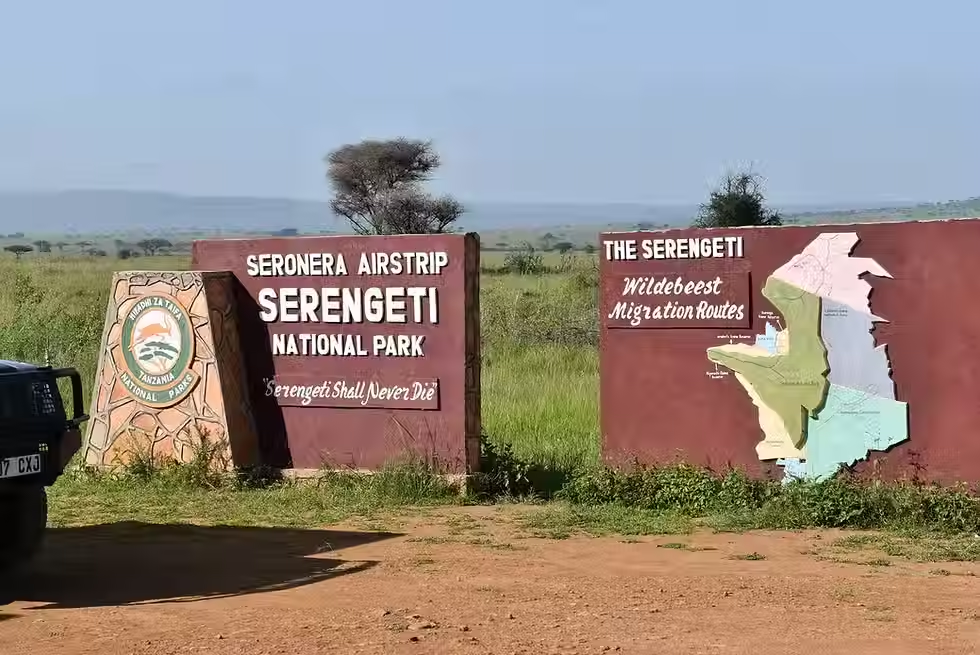
Located in the heart of Serengeti National Park, Seronera Airstrip is the busiest and most important safari airstrip in Tanzania. Unlike airstrips that mainly serve seasonal wildlife movements, Seronera provides year-round access to one of Africa's richest wildlife ecosystems. It is the preferred arrival point for travelers seeking a classic Serengeti Safari, photographers hoping to capture the Big Five, families exploring Tanzania for the first time, and luxury travelers who want to maximize their time in the bush.
For many visitors, flying directly into the Serengeti transforms the entire safari experience. Instead of spending long hours on the road from Arusha, a short bush flight places you in the middle of the park, where your first game drive often begins within minutes of landing. It is not unusual to encounter giraffes, elephants, zebras, or even lions on the journey from the airstrip to your safari lodge.
Whether you are planning a Luxury Tanzania Safari, a Fly-in Safari Tanzania adventure, a Serengeti and Ngorongoro Safari, or a Tanzania Safari from Zanzibar, understanding why Seronera Airstrip is considered the gateway to central Serengeti will help you choose the itinerary that offers the best balance of wildlife viewing, convenience, and value.
This guide explores everything you need to know about Seronera Airstrip, from its location and flight connections to the wildlife, safari experiences, travel tips, and reasons why it remains the most popular air gateway into Serengeti National Park.
Where Is Seronera Airstrip Located?
Seronera Airstrip is located in the central region of Serengeti National Park, within the Seronera Valley, one of the most wildlife rich areas in the entire ecosystem.
Its central position makes it uniquely valuable. Unlike northern or southern airstrips that primarily serve travelers during specific phases of the Great Migration, Seronera offers easy access to wildlife throughout the year. It sits at the crossroads of several major game-viewing areas, allowing visitors to explore different habitats without spending excessive time driving between destinations.
The surrounding landscape is a mosaic of open grasslands, granite kopjes, seasonal rivers, and scattered woodlands. Each habitat supports different animal species, creating remarkable biodiversity within a relatively small area.
Open plains attract grazing herbivores such as wildebeests, zebras, gazelles, and buffaloes. Granite kopjes provide ideal lookout points for lions and leopards, while river systems support hippos, crocodiles, and a variety of birdlife. This diversity explains why many safari experts regard central Serengeti as one of the most reliable wildlife-viewing destinations in Africa.
From Seronera Airstrip, visitors can reach many renowned safari camps and lodges in less than an hour. In many cases, wildlife sightings begin almost immediately after leaving the airstrip, turning a simple transfer into the first chapter of an unforgettable safari.

Why Seronera Airstrip Is the Heart of Serengeti National Park
Every major national park has a location that serves as its operational and tourism hub. In Serengeti National Park, that role belongs to the Seronera region.
Seronera is often described as the heart of the Serengeti, not because it lies at the geographical center of the park, but because it offers the most consistent wildlife viewing throughout the year. While other regions experience dramatic seasonal changes as the Great Migration moves across the ecosystem, Seronera remains productive regardless of the month.
This consistency is largely due to the Seronera River and its surrounding network of permanent water sources. Even during the dry season, these rivers continue to provide water, attracting animals from surrounding areas. Herbivores gather to drink and graze on nearby vegetation, while predators follow closely behind, knowing that prey is rarely far away.
For safari travelers, this creates one of the highest concentrations of wildlife in Tanzania. A single game drive may include elephants browsing beneath acacia trees, hippos wallowing in river pools, giraffes crossing the plains, and lions resting on rocky kopjes before beginning an evening hunt.
Because of this remarkable concentration of animals, Seronera has become the preferred base for many first-time visitors. It offers excellent opportunities to see the Big Five while also providing access to thousands of other mammals, reptiles, and birds that define the Serengeti ecosystem.
Unlike destinations that are best visited during a narrow seasonal window, Seronera rewards visitors every month of the year. This reliability is one of the primary reasons why airlines schedule more flights to Seronera Airstrip than to any other airstrip in the park.
A Brief History of Seronera Airstrip
Long before Serengeti became one of the world's most celebrated safari destinations, reaching its remote interior required days of travel over rough tracks. As tourism and conservation efforts expanded during the twentieth century, the need for reliable air access became increasingly important.
Seronera Airstrip was developed to meet that need.
Its central location allowed park authorities, researchers, conservationists, and safari operators to reach the heart of the Serengeti quickly and efficiently. Over time, as Tanzania's tourism industry grew, Seronera became the principal aviation hub within the national park.
Today, dozens of bush flights arrive and depart each week, connecting Seronera with Arusha, Kilimanjaro International Airport, Zanzibar, and other safari destinations across northern Tanzania.
Despite this growth, the airstrip has retained its bush-airstrip character. Travelers should not expect a conventional airport terminal with multiple gates or baggage carousels. Instead, the arrival experience is intentionally simple and efficient. Aircraft land on the bush runway, luggage is unloaded by hand, and within minutes visitors are meeting their safari guide and beginning their journey into one of the world's most extraordinary wildlife landscapes.
This simplicity is part of the charm. Rather than feeling like a busy airport, Seronera Airstrip serves as a seamless transition from modern travel to the wilderness of the Serengeti.
Why Most Fly-in Safaris Choose Seronera Airstrip
When planning a Fly-in Safari in Tanzania, one of the first decisions is choosing the most suitable arrival airstrip. Although Serengeti National Park has several airstrips, Seronera is the one most frequently included in safari itineraries.
The primary reason is accessibility.
From Seronera, safari guides can easily reach multiple regions of central Serengeti without requiring long transfers. This flexibility allows itineraries to adapt according to wildlife movements, weather conditions, and guest interests.
For travelers with limited vacation time, flying into Seronera can save an entire day that would otherwise be spent driving from Arusha. Instead of arriving at a lodge late in the afternoon after many hours on the road, visitors can board a morning bush flight and enjoy a game drive before lunch.
This efficiency is particularly valuable for travelers combining a Tanzania Safari from Zanzibar with a beach holiday. Rather than sacrificing precious vacation time to transportation, guests can move effortlessly between Zanzibar and the Serengeti, enjoying both destinations within a single itinerary.
Seronera also serves as an excellent starting point for longer journeys through northern Tanzania. Many itineraries begin in central Serengeti before continuing to Ngorongoro Crater, Tarangire National Park, or Lake Manyara National Park, creating a well-rounded safari that showcases the remarkable diversity of Tanzania's landscapes and wildlife.
Because of its central location, dependable wildlife viewing, and extensive flight connections, Seronera Airstrip remains the preferred gateway for thousands of visitors every year. For many travelers, it represents the beginning of a safari experience that exceeds every expectation.

Flights to Seronera Airstrip: Everything You Need to Know
One of the biggest advantages of choosing Seronera Airstrip is the ease with which travelers can reach the heart of Serengeti National Park. Although the Serengeti feels wonderfully remote once you arrive, it is surprisingly accessible thanks to Tanzania's well-developed network of bush flights connecting major cities, airports, and safari destinations.
For many visitors, especially those traveling from overseas, the journey begins at Kilimanjaro International Airport (JRO). After landing in northern Tanzania, travelers typically spend a night in Arusha before boarding a scheduled bush flight to Seronera the following morning.
Others arrive directly from Zanzibar after enjoying several days on the coast, while some connect from other safari destinations as part of a longer itinerary. Flying into Seronera eliminates the need for long overland drives and allows visitors to begin exploring the Serengeti almost immediately after landing.
Instead of spending an entire day traveling by road, you can find yourself watching elephants, lions, or giraffes before lunchtime.
For travelers with limited vacation time, this efficiency often becomes one of the strongest reasons to choose a Fly-in Safari Tanzania experience.
Which Airlines Fly to Seronera Airstrip?
Several domestic airlines operate scheduled flights to Seronera Airstrip throughout the year, connecting the Serengeti with key tourism hubs across Tanzania.
The airlines most commonly serving Seronera include:
Coastal Aviation
Auric Air
Flightlink
Regional Air
These airlines specialize in safari aviation and operate small aircraft designed for short takeoffs and landings on bush airstrips. Unlike commercial airliners, bush planes usually accommodate between 9 and 13 passengers, creating a much more intimate travel experience.
Although the aircraft are small, they are specifically built for the conditions found in Tanzania's national parks and are operated by experienced pilots who fly these routes daily.
For many travelers, the bush flight becomes one of the unexpected highlights of the safari. Flying at relatively low altitudes provides spectacular views of volcanic landscapes, the Great Rift Valley, winding rivers, and eventually the endless plains of the Serengeti stretching to the horizon.
Rather than simply transporting visitors from one destination to another, these flights become the first opportunity to appreciate the immense scale of Tanzania's wilderness.
Coastal Aviation
Popular Flight Routes to Seronera Airstrip
Seronera Airstrip is exceptionally well connected within Tanzania's safari network.
The most common routes include:
Arusha to Seronera Airstrip
This is the busiest route and the starting point for most visitors arriving in northern Tanzania.
Flights usually take between one and one-and-a-half hours, depending on whether the aircraft makes scheduled stops at other bush airstrips along the way.
Flying from Arusha allows travelers to avoid the seven to eight-hour drive into central Serengeti, dramatically increasing the amount of time available for wildlife viewing.
For many visitors, the time saved is better spent on afternoon game drives rather than sitting in a vehicle for most of the day.
Kilimanjaro International Airport to Seronera
Some safari itineraries arrange direct connections from Kilimanjaro International Airport, although many travelers first transfer to Arusha before boarding a scheduled safari flight.
This route is particularly convenient for international visitors arriving from Europe, North America, the Middle East, or Asia.
Because Kilimanjaro serves as Tanzania's primary international gateway, reaching Seronera from here is relatively straightforward.
Zanzibar to Seronera Airstrip
One of the fastest-growing safari routes in Tanzania connects Zanzibar with Seronera Airstrip.
Many travelers choose to combine white-sand beaches with a wildlife safari, creating a holiday that offers two completely different experiences within a single trip.
After relaxing beside the Indian Ocean, visitors can board a morning flight and arrive in the Serengeti in time for an afternoon game drive. This combination has become especially popular among honeymoon couples, families, and travelers celebrating special occasions.
A Tanzania Safari from Zanzibar also allows visitors to maximize their holiday without spending unnecessary time traveling between destinations.
Connections from Other Serengeti Airstrips
Seronera also serves as a central hub within the Serengeti itself.
Flights frequently connect with:
Kogatende Airstrip
Grumeti Airstrip
Kirawira Airstrip
Lobo Airstrip
These internal connections allow travelers to follow the movement of the Great Migration while minimizing road travel.
For example, a safari may begin in southern Serengeti during calving season before continuing north later in the year to witness Mara River crossings.
Bush flights make these seasonal itineraries practical while maintaining a high level of comfort.
How Much Do Flights to Seronera Airstrip Cost?
The cost of flying to Seronera depends on several factors, including the departure point, airline, season, and how far in advance tickets are booked.
As a general guide, travelers can expect approximate one-way fares of:
Route | Estimated Price (USD) |
Arusha – Seronera | $250–$450 |
Kilimanjaro – Seronera | $300–$500 |
Zanzibar – Seronera | $350–$650 |
Kogatende – Seronera | $180–$350 |
Grumeti – Seronera | $180–$350 |
These prices are intended as a guide and may fluctuate depending on demand, fuel costs, and the time of year.
In many cases, flights are included as part of a complete safari package. Booking flights and accommodation together through a safari operator often simplifies logistics and ensures that arrival times coordinate smoothly with transfers and game drives.
What Is It Like Flying Into Seronera Airstrip?
For travelers who have never experienced a bush flight before, the journey can feel very different from flying on a commercial airline. The experience begins long before takeoff.
Check-in is generally quick and uncomplicated. Because the aircraft are much smaller than commercial jets, passengers are usually asked to arrive around an hour before departure rather than several hours in advance.
After boarding, there are no assigned classes or elaborate cabin services. The focus is on efficiency and getting guests safely into the wilderness. As the aircraft climbs above Arusha, the landscape changes rapidly. Fertile farmland gradually gives way to rolling hills, volcanic formations, dry riverbeds, and eventually the vast grasslands that define northern Tanzania.
The final approach into Seronera is particularly memorable. Instead of descending toward a bustling international airport, the aircraft glides over open savannah where wildlife often grazes close to the runway. It is not unusual to spot zebras, giraffes, impalas, or warthogs from your window before the wheels even touch the ground.
Occasionally, park rangers or ground staff may briefly delay a landing until animals have moved safely away from the airstrip. For many visitors, this moment marks the true beginning of their safari.
Luggage Restrictions: Why Soft Bags Matter
One of the most common questions travelers ask concerns luggage allowances.
Because safari aircraft are smaller and designed to carry limited weight, baggage restrictions are stricter than those on international flights.
Most airlines permit approximately 15 kilograms (33 pounds) of luggage per passenger, including hand baggage. Soft-sided duffel bags are strongly recommended because they are easier to fit into the aircraft's cargo compartment.
Hard-shell suitcases can create loading difficulties and may not be accepted on some routes. If your international luggage exceeds the permitted weight, many hotels in Arusha offer secure storage facilities where larger suitcases can be left until your return.
Planning for these restrictions in advance helps ensure a smooth and stress-free journey.

Wildlife Encounters Begin Almost Immediately
One of the unique characteristics of Seronera Airstrip is that the safari often begins the moment the aircraft lands. Unlike conventional airports where travelers transfer to buses or taxis before reaching their destination, Seronera places visitors directly within the national park.
As soon as luggage is collected, guests meet their professional safari guide and board a specially designed safari vehicle. The drive from the airstrip to nearby camps frequently produces excellent wildlife sightings.
Elephants may be browsing among acacia trees. Giraffes often cross the tracks at an unhurried pace. Topis, hartebeests, and impalas graze in open areas close to the road.
Predators are never far away.
It is not uncommon for visitors to encounter lions resting beneath kopjes or leopards lounging in trees before they have even reached their accommodation.
This immediate immersion in the wilderness is one of the defining advantages of choosing a Serengeti Fly-in Safari.
Instead of losing valuable hours traveling through populated areas, every kilometer after landing offers the possibility of a memorable wildlife encounter.
Why Flying Can Actually Save Money
Many travelers initially assume that a fly-in safari is significantly more expensive than a road safari. While the flight itself adds cost, the overall value can sometimes be surprisingly competitive. Long road transfers require additional fuel, driver time, vehicle wear, and often an extra overnight stay to break up the journey.
Flying reduces these logistical expenses while allowing travelers to spend more time enjoying the safari they came for. For visitors on shorter itineraries, the additional wildlife viewing opportunities often justify the cost of the flight.
Rather than paying primarily for transportation, travelers are investing in time—arguably the most valuable resource on any safari.
Seronera Offers the Best Year-Round Wildlife Viewing in Serengeti National Park
One of the most common questions travelers ask when planning a Serengeti Safari is whether there is a "best" area of the park to visit. The answer often depends on what they hope to experience. Those interested in witnessing the dramatic Mara River crossings usually travel to the northern Serengeti during the migration season, while visitors fascinated by the birth of thousands of wildebeest calves often head to the southern plains around Ndutu.
However, if the goal is to enjoy consistently outstanding wildlife viewing regardless of the month, few places compare to the Seronera Valley. The reason lies in geography and ecology rather than chance. Unlike many parts of the Serengeti that experience pronounced seasonal changes, the Seronera region benefits from permanent water sources that continue flowing even during the driest months of the year.
The Seronera River and its tributaries support lush vegetation long after other areas have become dry, attracting herbivores that rely on dependable grazing and drinking water.
Where herbivores gather, predators inevitably follow. This natural relationship creates one of the highest concentrations of wildlife anywhere in East Africa. Instead of waiting for seasonal migrations to bring animals into the area, visitors to Seronera encounter thriving resident populations that remain throughout the year.
For travelers who may only have a few days in Tanzania, this reliability is invaluable. Rather than trying to time a safari around a specific migration event, visitors can confidently choose Seronera knowing that exceptional wildlife encounters are possible in every season.
The Big Five Around Seronera Airstrip
For many first-time visitors, seeing the Big Five is one of the highlights of a Tanzania safari. Originally coined by hunters to describe the five most difficult animals to hunt on foot, the term now represents the species that many safari travelers hope to photograph.
Thanks to its diverse habitats and abundant wildlife, the Seronera region offers excellent opportunities to see almost all of them.
Lions
Seronera is renowned for its healthy lion population.
The rocky granite outcrops, known as kopjes, provide ideal resting places where lions can survey the surrounding plains. During the heat of the day, prides often lounge on these elevated rocks before becoming more active in the cooler hours of morning and evening.
Because prey is abundant throughout the year, lions rarely need to travel far in search of food. This stability allows guides to monitor pride territories and greatly increases the likelihood of sightings.
Visitors frequently observe social behaviors such as cubs playing, females nursing young, and dominant males patrolling their territories. These intimate moments offer a deeper understanding of lion ecology than brief encounters alone.
Leopards
Few predators capture the imagination quite like the leopard.
Unlike lions, leopards are solitary and exceptionally elusive, making every sighting feel special.
The riverine forests surrounding the Seronera River provide ideal habitat, offering shade, cover, and trees where leopards can rest or store their kills safely above scavengers.
Experienced safari guides often know the favorite trees used by individual leopards, increasing the chances of locating these magnificent cats.
Seeing a leopard draped gracefully over a tree branch with the golden light of sunrise filtering through the leaves is an experience many travelers remember for the rest of their lives.
Elephants
Large elephant herds move freely through the central Serengeti, often feeding among the woodlands before crossing the open plains.
Elephants are among the most intelligent animals encountered on safari, displaying complex family relationships, remarkable memories, and sophisticated communication.
Watching a matriarch guide her family toward water while young calves play beneath the protection of older relatives offers a fascinating glimpse into one of nature's strongest social structures.
Because elephants remain in the Seronera area throughout much of the year, sightings are both frequent and rewarding.
Buffaloes
African buffaloes are sometimes underestimated because they are commonly seen across many safari destinations. However, observing large herds in the Serengeti reveals why they are considered one of Africa's most formidable animals. Buffaloes are highly social, fiercely protective of one another, and capable of defending themselves even against lions.
Large herds often graze peacefully across the plains before gathering at water sources during the heat of the day.
Their presence contributes significantly to the rich predator-prey dynamics that define the Seronera ecosystem.
Rhinos
Rhinos are the rarest of the Big Five within the Serengeti. Although occasional sightings occur, travelers hoping specifically to see black rhinos generally have greater success in the nearby Ngorongoro Crater. For this reason, many visitors combine a Serengeti and Ngorongoro Safari, allowing them to experience Seronera's remarkable predator populations alongside one of the best places in Tanzania to search for this critically endangered species.
Leopard
The Great Migration Around Seronera
Many people assume that the Great Migration only takes place in northern Serengeti during the famous Mara River crossings. In reality, the migration is a continuous circular journey covering approximately 800 kilometers each year.
The herds move according to rainfall, following fresh grazing opportunities across the Serengeti ecosystem. Because Seronera occupies a central position within this ecosystem, migration herds pass through the region during significant portions of the year.
Typically, large concentrations of wildebeests and zebras move through central Serengeti between April and June as they travel toward the western corridor and eventually northern Serengeti. Later in the year, many herds pass through the area again while returning south.
This means visitors flying into Seronera may still witness impressive migration activity without traveling to the northern reaches of the park.
Although the river crossings receive most of the international attention, migration viewing in central Serengeti offers several advantages. The landscape is more open, making wildlife photography easier. Vehicle congestion is generally lower than at famous river crossing points. Predator activity remains exceptional because lions, cheetahs, hyenas, and leopards continue to follow the migrating herds.
For many experienced safari enthusiasts, observing the migration in central Serengeti provides a more relaxed and equally rewarding experience.
Best Time to Fly into Seronera Airstrip
One of Seronera's greatest strengths is that it performs exceptionally well throughout the year. Each season offers a slightly different safari experience rather than a dramatic difference in wildlife quality.
January to March
Resident wildlife remains abundant, while migration herds occupy the southern Serengeti and Ndutu region. Travelers based in Seronera still enjoy excellent predator sightings, especially lions and leopards. This period is ideal for visitors combining central Serengeti with a short excursion toward the calving grounds.
April to June
These months coincide with one of the migration's major movements through central Serengeti. Large herds pass across the plains, attracting predators and creating spectacular wildlife encounters. The scenery becomes increasingly green following seasonal rains, adding vibrant color to the landscape. For photographers, this period offers beautiful contrasts between dramatic skies and lush grasslands.
July to October
While many migration herds move toward northern Serengeti, Seronera continues delivering excellent wildlife viewing. Resident predators remain active throughout the area, and elephants, buffaloes, giraffes, hippos, and numerous antelope species continue to provide outstanding game drives.Visitors who prefer avoiding the busiest migration areas often appreciate the more balanced safari experience available in central Serengeti during these months.
November to December
Short rains begin transforming the plains once again. Wildlife remains plentiful, and visitor numbers generally decline compared with peak migration season.This creates a quieter atmosphere while maintaining excellent opportunities for photography and wildlife observation.
Who Should Choose Seronera Airstrip?
Not every safari traveler has identical priorities.
Fortunately, Seronera Airstrip is versatile enough to suit almost every style of safari.
First-Time Visitors
If this is your first safari in Tanzania, Seronera is arguably the best place to begin.
Its exceptional year-round wildlife viewing means visitors are not dependent on perfectly timing the migration to enjoy an unforgettable experience. The variety of habitats and species also provides an excellent introduction to the Serengeti ecosystem.
Wildlife Photographers
Photographers often choose Seronera because of its remarkable diversity.
Rather than focusing on a single migration event, photographers can spend several days capturing different species, behaviors, and landscapes. Morning mist over the river, lions basking on granite kopjes, elephants silhouetted against the setting sun, and leopards resting in acacia trees all provide endless creative opportunities.
Families
Families benefit from Seronera's accessibility and reliable wildlife viewing.
Children are far more likely to remain engaged when animals are encountered regularly throughout the day rather than after long periods of driving.
Shorter transfer times from the airstrip to nearby lodges also reduce travel fatigue, making the safari more enjoyable for younger visitors.
Luxury Travelers
Many of Tanzania's finest safari lodges and tented camps are located within easy reach of Seronera Airstrip. Flying directly into the heart of the Serengeti allows luxury travelers to spend more time enjoying exceptional accommodations, personalized service, and private game drives instead of lengthy road transfers.For honeymoon couples and travelers celebrating special occasions, this combination of convenience and exclusivity creates an unforgettable safari experience.

Safari Itineraries That Begin at Seronera Airstrip
Because of its central location, Seronera serves as the starting point for many of Tanzania's most popular safari itineraries.
A 4 Day Migration Safari often begins in Seronera before following the movement of the herds toward the western corridor or northern Serengeti.
A 7 Day Migration Safari provides additional flexibility, allowing guides to spend more time tracking wildlife while adapting to seasonal migration patterns.
Travelers combining Serengeti and Ngorongoro Safari experiences frequently arrive at Seronera before continuing by road to the Ngorongoro Crater, creating one of Tanzania's most iconic wildlife circuits.
For visitors beginning their holiday on the coast, a Tanzania Safari from Zanzibar typically includes a direct flight into Seronera, allowing them to transition effortlessly from tropical beaches to one of Africa's greatest wildlife destinations.
Luxury itineraries also rely heavily on Seronera because of its proximity to many of the Serengeti's most prestigious camps. Rather than spending valuable holiday time traveling overland, guests can arrive in the park within hours and begin their safari almost immediately.
Practical Travel Information for Seronera Airstrip
Planning a fly-in safari is straightforward, but understanding how bush airstrips operate can make your journey even smoother.
Unlike international airports, Seronera Airstrip is designed specifically for safari operations. Facilities are intentionally simple because the focus is on getting visitors into the national park as efficiently as possible. Once your aircraft lands, your luggage is unloaded manually, and your safari guide will already be waiting nearby. Within minutes, you'll be on your way into the Serengeti.
This streamlined process is one of the reasons many travelers prefer a Fly-in Safari Tanzania. Instead of navigating crowded terminals or lengthy transfers, you move almost seamlessly from the aircraft into one of the world's greatest wildlife destinations.
Luggage Guidelines
Because flights to Seronera are operated using light safari aircraft, luggage restrictions are stricter than on commercial airlines.
Most airlines allow:
15 kg (33 lbs) per passenger, including hand luggage.
Soft-sided duffel bags, which fit more easily into the aircraft's cargo compartment.
Cameras and equipment are included in the total baggage allowance, although some airlines permit additional photographic gear if arranged in advance.
If you are arriving in Tanzania with large international suitcases, many hotels in Arusha offer secure luggage storage until you return from your safari. Packing light not only helps meet airline requirements but also makes it easier to move between safari camps if your itinerary includes multiple destinations.
Accommodation Near Seronera Airstrip
One of the biggest advantages of flying into Seronera is the wide range of accommodation available nearby. The central Serengeti offers options ranging from comfortable tented camps to some of Tanzania's most exclusive luxury lodges in Serengeti.
Budget-conscious travelers can choose well-equipped camps that provide comfortable beds, excellent meals, and close access to wildlife without unnecessary extravagance.
Mid-range camps offer additional comfort while maintaining an authentic safari atmosphere.
Luxury properties elevate the experience further with spacious suites, fine dining, personalized service, spa facilities, private verandas, and panoramic views across the Serengeti plains.
Perhaps the greatest advantage is location.
Many camps near Seronera are positioned within prime wildlife areas. This means morning game drives begin almost immediately, allowing guests to spend more time observing wildlife and less time driving between destinations.

Should You Choose a Road Safari or Fly Into Seronera?
This is one of the most common decisions travelers face when planning a Tanzania Safari.
A road safari offers an opportunity to experience changing landscapes while traveling through northern Tanzania. Visitors may pass villages, agricultural areas, and conservation landscapes before reaching the Serengeti. For travelers with more time and a preference for gradual exploration, this can be an enjoyable journey.
However, road transfers to central Serengeti typically take seven to eight hours from Arusha, depending on road conditions and stops along the way.A fly-in safari offers a very different experience. Instead of spending most of the day driving, travelers board a morning bush flight and arrive in the Serengeti in time for lunch or even an early game drive. The time saved can often be used for additional wildlife viewing, photography, or simply relaxing at camp.
For visitors with limited vacation time, honeymoon couples, families with young children, or anyone prioritizing wildlife over road travel, flying into Seronera usually provides the best overall value.
How Seronera Fits Into a Complete Northern Tanzania Safari
Seronera is rarely the only destination on a well-planned itinerary.
Its central location makes it an excellent starting point for exploring northern Tanzania's most famous national parks.
Many travelers combine Seronera with the Ngorongoro Crater, where they have an excellent chance of seeing black rhinos alongside lions, elephants, buffaloes, and large populations of flamingos during certain seasons. Others continue to Tarangire National Park, renowned for its ancient baobab trees and large elephant herds, or Lake Manyara National Park, famous for its diverse birdlife and scenic escarpment setting.
Travelers arriving from Zanzibar often begin their safari in Seronera before continuing through the northern circuit, creating a seamless combination of beach relaxation and unforgettable wildlife encounters. Because Seronera connects easily with these destinations, it serves as the ideal gateway for first-time visitors exploring Tanzania.
Frequently Asked Questions About Seronera Airstrip
Where is Seronera Airstrip located?
Seronera Airstrip is located in the Seronera Valley in central Serengeti National Park. Its central position provides convenient access to many of the park's most productive wildlife-viewing areas throughout the year.
Why is Seronera Airstrip so popular?
Seronera Airstrip is the busiest safari airstrip in Serengeti National Park because it offers year-round access to exceptional wildlife viewing. Its location near permanent water sources supports large resident populations of animals, making it one of the most reliable safari destinations in Africa.
Which airlines fly to Seronera Airstrip?
Domestic safari airlines such as Coastal Aviation, Auric Air, Flightlink, and Regional Air operate scheduled flights to Seronera from destinations including Arusha, Kilimanjaro, Zanzibar, and other Serengeti airstrips.
Can I fly from Zanzibar to Seronera Airstrip?
Yes. A Tanzania Safari from Zanzibar is one of the most popular travel combinations in the country. Scheduled flights allow travelers to leave Zanzibar in the morning and begin a game drive in the Serengeti the same day.
How much do flights to Seronera Airstrip cost?
Prices vary depending on the airline, season, and departure point. As a general guide, flights from Arusha usually range between USD 250 and USD 450, while flights from Zanzibar typically range between USD 350 and USD 650 per person, one way.
What wildlife can I see near Seronera Airstrip?
The area is home to lions, leopards, elephants, buffaloes, giraffes, zebras, wildebeests, cheetahs, hyenas, hippos, crocodiles, and hundreds of bird species. Wildlife viewing is excellent throughout the year.
Is Seronera the best place to see the Great Migration?
Seronera is an excellent place to witness portions of the Great Migration as herds move through central Serengeti. However, travelers specifically hoping to see Mara River crossings should consider northern Serengeti during the migration season, while those interested in calving should visit the Ndutu region.
What luggage restrictions apply on flights to Seronera?
Most safari airlines allow approximately 15 kilograms (33 pounds) of luggage per passenger. Soft-sided bags are recommended because they fit more easily into bush aircraft.
Is Seronera Airstrip suitable for first-time safari visitors?
Yes. Its consistent wildlife viewing, convenient location, and excellent flight connections make Seronera one of the best entry points for travelers visiting Serengeti National Park for the first time.
Should I choose a fly-in safari or drive to the Serengeti?
The answer depends on your priorities. A road safari offers a scenic journey through northern Tanzania, while a fly-in safari maximizes your time inside the national park. Travelers with limited time often find that flying provides the best balance of convenience and wildlife viewing.
Plan Your Fly-in Serengeti Safari with Edel Safaris
The right itinerary can make the difference between a good safari and an unforgettable one. At Edel Safaris, we design personalized journeys that match your travel style, interests, and budget, ensuring you experience the very best of Tanzania. Whether you're looking for a Luxury Tanzania Safari, a Fly-in Safari Tanzania, a Serengeti and Ngorongoro Safari, or a Tanzania Safari from Zanzibar, our experienced team will help you choose the ideal itinerary, flights, and accommodations for a seamless adventure.
Contact Edel Safaris today to start planning your Serengeti safari through Seronera Airstrip and discover why Tanzania remains one of the world's greatest wildlife destinations.


Comments