
Arabuko Sokoke National Park
Kenya
Arabuko Sokoke Forest: Complete Guide to Kenya's Coastal Forest Sanctuary
Kenya's Hidden Coastal Wilderness
Arabuko Sokoke Forest is not the savannah of the Maasai Mara. It is not the elephant-filled plains of Amboseli. It is something entirely different — a ancient coastal dry forest tucked inland along Kenya's Indian Ocean coastline, between the towns of Kilifi and Malindi, approximately 110 kilometers north of Mombasa . This 420-square-kilometer forest is the largest remaining fragment of the forests that once covered much of the East African coast, a remnant of a lost world that stretches back millions of years . It is one of Africa's most remarkable, yet least-known, natural treasures.
While most visitors to Kenya's coast come for the turquoise waters and white sand beaches of Watamu and Malindi, just minutes inland lies this vastly different world. Enter Arabuko Sokoke and you step into a realm of ancient trees, rare birds, unique mammals, and a quiet that feels almost sacred. The air is filled with butterflies, the trees alive with monkeys, and the forest floor home to creatures found nowhere else on Earth . Here, you walk on foot through three distinct forest types, each with its own special flora and fauna, guided by local experts who know every hidden trail and elusive bird call.
The forest has been recognized by BirdLife International as the second most important forest for bird conservation on mainland Africa . It is a Key Biodiversity Area, an Important Bird Area, and an Alliance for Zero Extinction site — designations that reflect its extraordinary global significance . Yet despite this acclaim, Arabuko Sokoke remains a hidden gem, overshadowed by Kenya's beach resorts and famous savannah safaris . For bird watchers, conservation enthusiasts, and travelers seeking a deeper connection with nature, this coastal forest sanctuary offers an unforgettable experience.
The Three Forest Types
A Mosaic of Habitats
Arabuko Sokoke is not a uniform forest. It is a mosaic of three very distinctive forest types, each corresponding to different soil types and each harboring its own unique wildlife .
Mixed Forest covers approximately 7,000 hectares in the eastern section of the reserve, on grey Pleistocene lagoonal sands. This habitat is relatively dense, tall, and undifferentiated, with a diversity of tree species. Characteristic trees include Combretum schumannii, Drypetes reticulata, Afzelia quanzensis, Dialium orientale, and Hymenaea verrucosa . The dense vegetation in this forest type creates a tropical atmosphere, the real feel of being "in the woods" . The Golden-rumped Elephant Shrew, East Coast Akalat, and Tiny Greenbuls are commonly sighted here .
Brachystegia Woodland runs in a strip through the approximate center of the forest, covering 7,700 hectares on white, very infertile soil. This relatively open habitat is dominated by Brachystegia spiciformis . Also known as Miombo woodlands, this forest type is airy and beautiful to walk through. Birds and butterflies are more visible here due to the open canopy . The Sokoke Pipit and Amani Sunbird are found in this habitat .
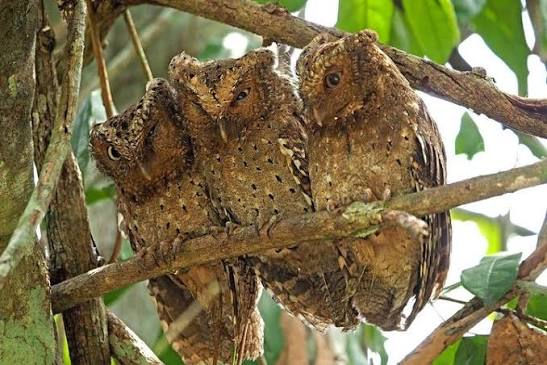
Cynometra Forest and Thicket covers more than half of the forest reserve, on red Magarini sands in the western section . Dominated by Cynometra webberi with Manilkara sulcata and Oldfieldia somalensis, this habitat includes areas of relatively tall forest with a canopy height of up to 20 meters, as well as lower, scrubbier formations and an almost impenetrable thicket with a canopy no more than 5 meters high . The Sokoke Scops Owl is found here . Sightings of Caracal, Civet, Genet, Suni, and other mammals are more common on tracks in this forest type .
The transition between the white and red soils is sudden and marked by a chain of seasonal ponds . Altogether, the area of indigenous forest or thicket totals approximately 38,200 hectares .
Wildlife of Arabuko Sokoke
Birds
Arabuko Sokoke is a global magnet for birders. Over 230 to 270 bird species have been recorded here, including several globally threatened and endemic species . BirdLife International has ranked it as the second most important forest for bird conservation on mainland Africa .
The Sokoke Scops Owl (Otus ireneae) is the forest's most famous resident . This tiny, endangered owl is found primarily in this forest, though there have been reported sightings in the Usambara Mountains in Northern Tanzania . It is confined to Cynometra forest and is more often heard than seen, its haunting call echoing through the forest at night . The chance of a sighting makes this a real mecca for birders .
Clarke's Weaver (Ploceus golandi) is considered one of the rarest birds in the world . It is known only from Arabuko Sokoke and the little-studied Dakatcha woodland, occurring mainly in Brachystegia woodland . Its nest is unknown .
Other globally threatened species include :
Sokoke Pipit (Anthus sokokensis) – Endangered
Amani Sunbird (Anthreptes pallidigaster) – Endangered
Spotted Ground Thrush (Geokichla guttata) – Vulnerable
East Coast Akalat (Sheppardia gunningi) – Near Threatened
Fischer's Turaco (Tauraco fischeri) – Near Threatened
Southern Banded Snake Eagle (Circaetus fasciolatus) – Near Threatened
Other notable species include the African Pitta, a scarce non-breeding visitor rarely seen and highly sought after by birders . The Brown-breasted Barbet, Green-headed Oriole, and Black-bellied Glossy-starling are also among the forest's many residents .
Mammals
Arabuko Sokoke is rich in rare and endemic mammals. Forty mammal species have been recorded, including African elephants, African buffalo, African civet, caracal, Syke's monkeys, yellow baboons, and lesser galago (bushbaby) .
The Golden-rumped Elephant Shrew (Rhynchocyon chrysopygus) is one of the forest's most famous residents . This endangered species is the largest elephant shrew in the world and is found nowhere else globally . Despite its name, it is not actually a shrew but belongs to an ancient African order of mammals. It is diurnal and relatively easy to observe along forest trails, making it a flagship species for ecotourism .
The Ader's Duiker (Cephalophus adersi) is a rare forest antelope found only in Sokoke and Zanzibar . The Sokoke Bushy-tailed Mongoose (Bdeogale crassicauda omnivora) is another rare near-endemic small carnivore .
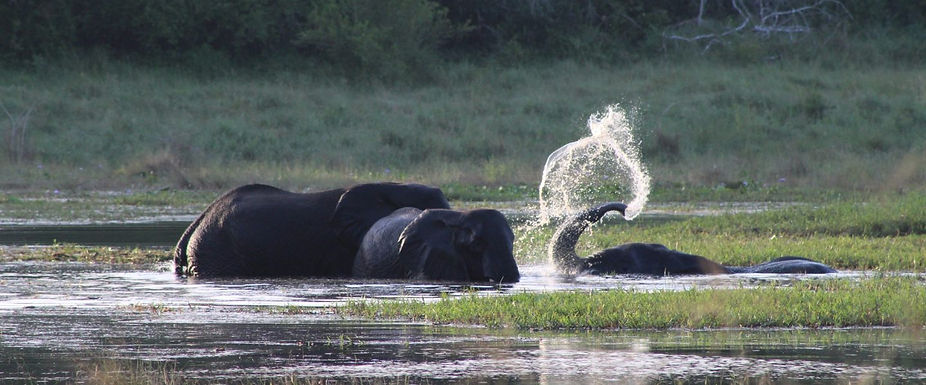
Elephants are present but in small numbers. Herds occasionally pass through the forest en route to the Sabaki River . Sunset sightings of elephants at forest swamps are considered magical .
Reptiles, Amphibians, and Butterflies
The forest is exceptionally rich in reptiles and amphibians. Forty-nine reptile species and 25 amphibian species have been recorded . Unusual reptiles include the lizard Gastropholis prasina, and coastal endemic amphibians such as Mertensophryne micrannotis .
Arabuko Sokoke is also exceptional for butterfly diversity, with over 260 species recorded . Six taxa of butterfly endemic to the East African coast are present . The Kipepeo butterfly farming initiative, based at the forest, exports butterfly pupae to Europe and America .
Plants
The forest supports at least 50 globally or nationally rare plant taxa . The iconic Brachylaena huillensis, preferred for the carving industry and construction, has been severely affected by logging. Medicinal plants used by local communities are abundant .
The Gede Ruins
Adjacent to the forest's eastern boundary lie the Gede Ruins, a UNESCO World Heritage Site of a medieval Swahili-Arab trading town . The town thrived here for hundreds of years, hidden away from Portuguese invaders and the influence of the outside world . It was eventually deserted, and today the ruins, lying among the trees and twisting vines of the forest, are a haunting reminder of the past . A visit to the Gede Ruins can be combined with a forest walk, offering both history and nature in one outing.
Best Time to Visit Arabuko Sokoke
Dry Seasons — June to September and January to February
The best time to visit Arabuko Sokoke is during the dry seasons. From June to September, the southeast trade winds bring cooler, drier conditions. January to February is also relatively dry, with fewer afternoon showers . During these months, the trails are firm and easy to walk, and bird activity is high. The coastal heat is still present, but early mornings and late afternoons offer the most comfortable conditions for wildlife viewing .
Rainy Seasons — April to June and October to December
Arabuko Sokoke experiences two wet seasons: the long rains from April to June and the short rains from October to December, bringing approximately 1,000 to 1,200 millimeters annually . During these months, the forest is at its greenest and most beautiful, with wildflowers blooming and migratory birds present. However, the trails can become muddy and slippery, and some areas may be inaccessible. The risk of flash floods is real, and the humidity is at its highest. The green season offers lower prices and a more intimate experience, but you should be prepared for afternoon showers.
Climate at the Coast
Arabuko Sokoke has a typical coastal tropical climate with warm temperatures year-round ranging from 22°C to 32°C . Humidity is high throughout the year, often exceeding 80%. The hottest months are February and March before the long rains arrive . The forest benefits from its proximity to the ocean and maintains relatively stable humidity compared to inland forests.
Best Time by Priority
Priority | Best Months | Why |
Bird watching (including migratory species) | November-April | Migratory species present |
Bird watching (resident species) | June-September | Dry conditions, clear trails |
Walking and hiking | June-September, January-February | Firm trails, less rain |
Golden-rumped Elephant Shrew spotting | Year-round | Diurnal, active in mornings and late afternoons |
Avoiding crowds | April-June, October-December | Fewer tourists, lower prices |
Photography (green landscapes) | April-June, October-December | Lush vegetation |
Logistics and Tips for Arabuko Sokoke
How to Get There
By road from Malindi or Watamu – The forest is easily accessible by road, making it perfect for a day trip from Watamu, Malindi, or Kilifi . The reserve headquarters is at Gede, approximately 15 kilometers south of Malindi and 105 kilometers north of Mombasa, accessible by paved road . Main road access is via Gedi, easily accessed from Mombasa or Malindi by bus, matatu, or private transport . The distance from Malindi is short, and many Watamu accommodations can organize transfers from Mombasa or Malindi .
By road from Mombasa – The drive from Mombasa to Gede takes approximately 2 to 2.5 hours along the coastal highway. A standard sedan is adequate to reach the gate, but the forest's internal roads are limited.
By road from Nairobi – The journey from Nairobi is longer, approximately 6 to 7 hours. Many travelers fly to Malindi or Mombasa and then drive to the forest.
By air – The nearest airports are Malindi Airport and Mombasa's Moi International Airport. From Malindi, the forest is a 15-minute drive. From Mombasa, the drive is approximately 2 hours.
Park Fees and Gates
As of recent reports, entry fees for non-residents are approximately $20 (USD) . Kenyan citizens and residents pay lower rates . A walking guide costs approximately 2,400 KES (approximately $18 USD) for a two-hour guided walk . Park fees can vary and are subject to change — it's always best to check the latest fees upon arrival or through official park channels.
The forest is a Forest Reserve managed jointly by the Kenya Forest Service (KFS) and the Kenya Wildlife Service (KWS) under a Memorandum of Agreement through the Arabuko Sokoke Forest Management Team (ASFMT) . It is open during daylight hours, typically from 6 AM to 6 PM. Confirming exact hours with park management is recommended .
Where to Stay
Accommodation options near Arabuko Sokoke range from luxury resorts to guesthouses and campsites. The closest options are in Watamu and Malindi.
Luxury resorts near Watamu – Hemingways Watamu offers comfortable rooms and can organize forest excursions . Many Watamu beach resorts provide convenient access to the forest.
Mid-range lodges and guesthouses – Options in Malindi and Watamu cater to mid-range budgets, offering comfortable rooms with access to the forest.
Budget options – Guesthouses and campsites are available in the area. Budget travelers can stay in Malindi or Watamu and visit the forest on a day trip.
Guided Walks and Activities
Guided Walks – The best way to explore the forest is on foot. Well-marked nature trails take visitors through different habitats, from Brachystegia woodlands to dense Cynometra thickets . Guided walks led by local experts enrich the experience by revealing hidden wildlife and explaining the forest's ecological significance . Knowledgeable guides are essential for spotting elusive species . Guides like Jonathan Baya (recommended for birders) and Apollo (specialist bird guide) can significantly enhance your wildlife spotting .
Cycling – Active travelers can enjoy cycling through forest paths . This is a great way to cover more ground while still experiencing the forest up close.
Bird Watching – The forest is a paradise for birdwatchers. Early mornings (6 AM to 10 AM) are best for bird activity before the midday heat . Guides can take you to bird hides and key habitats for rare species like the Sokoke Scops Owl and Clarke's Weaver .
Photography – The forest offers endless opportunities to capture its colors, textures, and rare species. A telephoto lens is useful for capturing distant birds and mammals. Avoid using flash that might disturb wildlife .
Butterfly Farming Visits – The Kipepeo butterfly farming initiative of the National Museums and Nature Kenya assists people living close to the forest to produce butterfly pupae for export . Visitors can see this innovative community project that helps local people earn sustainable incomes from the forest.
What to Pack
Clothing – Light, breathable clothing for the coastal heat. Long sleeves and long trousers can protect against insects, sunburn, and scratches from vegetation. Comfortable walking shoes or sturdy hiking boots are essential for forest trails .
Sun protection – A wide-brimmed hat, sunglasses, and high-SPF sunscreen are essential. The coastal sun is intense .
Insect repellent – Mosquitoes and other insects are present in the forest. Repellent is recommended.
Water – Bring at least 2 to 3 liters of water per person. The coastal heat is no joke, and staying hydrated is essential .
Snacks – High-energy snacks like granola bars, nuts, and dried fruit. There are limited facilities inside the forest.
Camera – The forest's unique wildlife and landscapes are spectacular. A camera with a good zoom lens will capture memories. Bring extra batteries and memory cards .
Binoculars – Essential for bird watching and spotting wildlife in the canopy.
Insider Tips for Arabuko Sokoke
Book a local guide in advance – A knowledgeable guide significantly enhances your experience, especially for spotting elusive wildlife and understanding the forest's ecology . Guides like Jonathan Baya are excellent for birders . Ask for a specialist bird guide if birds are your priority .
Visit early in the morning – Early mornings are best for wildlife spotting and cooler temperatures . The park opens at 6 AM, and bird activity peaks in the first few hours.
Combine with Gede Ruins – The Gede Ruins, a UNESCO World Heritage Site, adjoin the forest's eastern boundary and can be combined with a forest visit .
Be snake aware – The forest has venomous snakes, including some of the most venomous in the world . Always stay with your guide, watch where you step, and avoid reaching into crevices or under logs.
Respect wildlife – Maintain a safe distance and never feed the animals . The wildlife here is wild and unpredictable.
Support conservation – Arabuko Sokoke faces threats from illegal logging, charcoal burning, agricultural encroachment, and human settlement . Conservation efforts focus on community benefit-sharing through ecotourism guides, honey cooperatives, and butterfly farming projects that provide income alternatives to forest exploitation . Your visit supports this work.
Bring cashless payment options – Park fees can be paid in KES or USD cash, but mobile money (M-Pesa) is also widely accepted. Confirm before your visit.



Frequently Asked Questions About Arabuko Sokoke Forest
What is Arabuko Sokoke Forest?
Arabuko Sokoke Forest is the largest remaining coastal dry forest in East Africa, covering approximately 420 square kilometers along Kenya's north coast near Malindi and Watamu . It is a biodiversity hotspot of global importance, sheltering numerous endemic and threatened species found nowhere else on Earth . The forest is managed jointly by the Kenya Forest Service and Kenya Wildlife Service as a Forest Reserve and National Reserve .
Why is Arabuko Sokoke important for bird watching?
BirdLife International has ranked Arabuko Sokoke as the second most important forest for bird conservation on mainland Africa . Over 230 to 270 bird species have been recorded, including several globally threatened and endemic species . The forest is home to the endangered Sokoke Scops Owl, the rare Clarke's Weaver, Sokoke Pipit, Amani Sunbird, East Coast Akalat, Fischer's Turaco, and Southern Banded Snake Eagle . Many of these species are found nowhere else on Earth.
What is the Sokoke Scops Owl?
The Sokoke Scops Owl (Otus ireneae) is a tiny, endangered owl that is found primarily in Arabuko Sokoke Forest, though there have been reported sightings in the Usambara Mountains in Northern Tanzania . It is confined to Cynometra forest and is more often heard than seen . The chance of a sighting makes this a real mecca for birders .
What is the Golden-rumped Elephant Shrew?
The Golden-rumped Elephant Shrew (Rhynchocyon chrysopygus) is an endangered species that is the largest elephant shrew in the world and is found nowhere else globally . Despite its name, it is not a shrew but belongs to an ancient African order of mammals. It is diurnal and relatively easy to observe along forest trails, making it a flagship species for ecotourism .
Do I need a guide to explore the forest?
Yes, a guide is highly recommended. While you can enter the forest independently, a knowledgeable local guide significantly enhances your experience, especially for spotting elusive wildlife and understanding the forest's ecology . Guides are experts at finding rare birds, elephant shrews, and other wildlife. Booking in advance is recommended, especially for specialist bird guides .
What is the best time of day to visit?
Early mornings are best for wildlife spotting and cooler temperatures . The park opens at 6 AM, and bird activity peaks in the first few hours before the midday heat. Late afternoons are also good, especially for sunset elephant sightings .
Can I see elephants in Arabuko Sokoke?
Yes, elephants are present, but in small numbers . Herds occasionally pass through the forest en route to the Sabaki River . Sunset sightings of elephants at forest swamps are considered magical . However, elephant viewing is not guaranteed, and the forest is not primarily known for large mammals.
What should I pack for a visit?
Pack light, breathable clothing, comfortable walking shoes or hiking boots, a wide-brimmed hat, sunglasses, high-SPF sunscreen, insect repellent, at least 2 to 3 liters of water, high-energy snacks, a camera with zoom lens, and binoculars . Long sleeves and trousers protect against insects and sun .
Are there accommodation options inside the forest?
No, there are no permanent lodges or hotels inside the forest. The best options are in nearby Watamu and Malindi, both within 30 minutes' drive . Many beach resorts in Watamu can organize forest excursions.
How do I get to Arabuko Sokoke?
The forest is easily accessible by road, making it perfect for a day trip from Watamu, Malindi, or Kilifi . The reserve headquarters is at Gede, approximately 15 kilometers south of Malindi and 105 kilometers north of Mombasa, accessible by paved road . Main road access is via Gedi, easily accessed from Mombasa or Malindi by bus, matatu, or private transport . By air, the nearest airports are Malindi and Mombasa.
Is the forest safe for visitors?
Yes, the forest is safe for visitors when accompanied by a guide. Be aware of your surroundings, especially regarding snakes, and follow your guide's instructions . The forest's venomous snakes require caution, but guided walks minimize risk.
Ready to Discover Kenya's Coastal Forest Sanctuary?
You have read the complete guide. You know that Arabuko Sokoke Forest is the largest remaining coastal forest in East Africa and a biodiversity hotspot of global importance, home to over 270 bird species, 40 mammal species, and countless endemic species found nowhere else on Earth. You know that the forest is a birdwatcher's paradise, with the endangered Sokoke Scops Owl, Clarke's Weaver, and Sokoke Pipit among its most sought-after residents. You know that the Golden-rumped Elephant Shrew, found only in this forest, is a highlight for many visitors. You know that the forest's three distinct habitats — Mixed Forest, Brachystegia Woodland, and Cynometra Forest — each harbor unique wildlife. You know that the forest is open year-round, with the best time being the dry seasons from June to September and January to February. You know that the forest is accessible by road from Malindi, Watamu, and Mombasa, and that guided walks are the best way to explore its secrets. You know that the Gede Ruins, a UNESCO World Heritage Site, adjoin the forest and can be combined with a forest visit.
Now it is time to turn that knowledge into an actual booking.
Here is what we offer
We build custom Arabuko Sokoke itineraries ranging from 1 day to 3 days. We combine Arabuko Sokoke with the Gede Ruins, Watamu Marine National Park (turtle watching and snorkeling), Malindi's attractions, or a beach extension. Every itinerary is built around your budget, travel dates, and specific interests — whether that is bird watching, forest walking, photography, or combining nature with coastal relaxation.
Tell us three things
First, how many days do you want at Arabuko Sokoke and any other destinations? (Recommended: 1 day for a forest walk, 2 days to combine with Gede Ruins and Watamu Marine Park). Second, what is your budget per person? Budget under $100 for a day trip, mid-range $100 to $300 for a 2-day package, or luxury over $300 for a premium experience. Third, what is your priority? Bird watching (including specialist guide), Golden-rumped Elephant Shrew spotting, forest walking, photography, or combining with coastal attractions?
What you will receive
Send us those three details and we will reply within 24 hours with recommended itineraries matched to your interests and budget, a day-by-day schedule showing exactly what you will do each day, a total cost breakdown including park fees, guide fees, transport, and accommodation with no hidden fees, and transport options from Mombasa, Malindi, or Watamu.
Your Arabuko Sokoke adventure starts here
Button: Request a Custom Arabuko Sokoke Quote
Button: See Arabuko Sokoke Package Prices (1 Day, 2 Days, 3 Days)
Button: Combine Arabuko Sokoke + Watamu Marine Park + Gede Ruins
Contact us directly
WhatsApp: +255746328326
Email: info@edelsafari.com