
Best Time to Visit Serengeti for the Great Migration (Month by Month Guide)

The Great Migration in Serengeti National Park is one of the most remarkable wildlife events anywhere in the world. Each year, more than 1.5 million wildebeest, accompanied by zebras, gazelles, and other plains animals, move across the Serengeti,Mara ecosystem in a circular journey driven by rainfall, fresh grazing land, and survival instinct. It is not a one day spectacle or a fixed event like a festival. It is a year round natural cycle that changes month by month, creating different safari experiences depending on when you visit.
Many travelers make the mistake of asking only, “When is the best time to visit the Serengeti?” The more accurate question is, what kind of Great Migration experience do you want? Some visitors want to witness dramatic Mara River crossings. Others dream of seeing thousands of wildebeest calves born on the southern plains. Some want predator action, while others prefer fewer crowds and lower rates. Every month offers something different.
This detailed month by month guide explains where the migration usually is, what wildlife experiences you can expect, how weather conditions affect safari quality, and which months are ideal depending on your travel goals.
Understanding How the Great Migration Works
To choose the best time correctly, it helps to understand how the migration actually works. Wildebeests are constantly searching for the most nutritious grass and reliable water sources. They follow the rain because rain creates fresh pasture. As grass is consumed in one area, the herds continue moving to the next productive region.
This means the migration does not obey a strict calendar. Heavy rains can cause herds to arrive earlier in one region or remain longer in another. However, there is a strong seasonal pattern that safari experts use to predict herd movement.
Typically, the cycle follows this rhythm:
December to March: Southern Serengeti and Ndutu plains
April to May: Central Serengeti moving westward
June to July: Western Corridor and Grumeti River
July to October: Northern Serengeti and Mara River
November: Return south through the central plains
Because of this movement, the “best time” depends entirely on matching the right month with the right region.
January – Southern Serengeti Builds Toward Calving Season
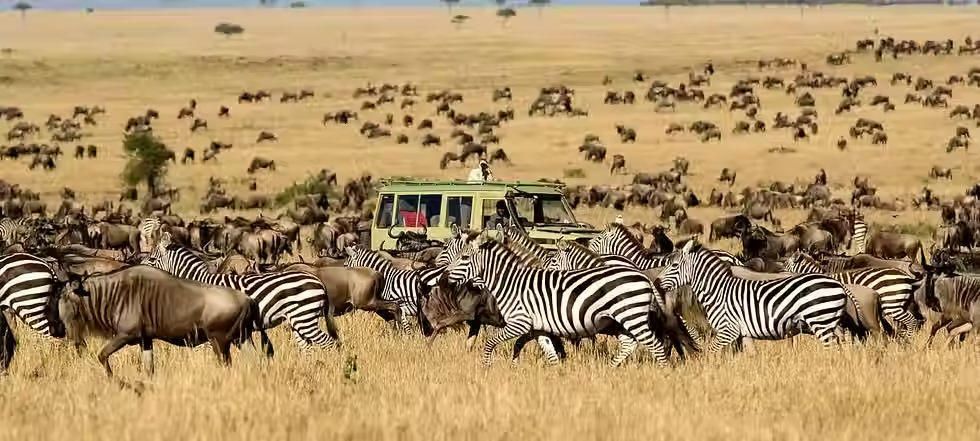
January is an exceptional month for travelers who appreciate scenery, herd density, and quieter safari conditions. During this period, the wildebeest are concentrated in the Southern Serengeti and Ndutu conservation area, where short grass plains offer mineral rich grazing that is ideal for pregnant females.
The landscape is often green and fresh after seasonal rains, creating beautiful contrasts for photography. Huge herds spread across the plains, sometimes extending beyond the horizon. Predator activity begins increasing because lions,
hyenas, cheetahs, and leopards know the birthing season is close.
January is ideal for travelers who want migration numbers without the heaviest tourist traffic. It is also one of the best months for photography because the skies are dramatic, the grass is lush, and dust levels are lower than dry season months.
February – Peak Calving Season and Predator Drama
February is widely considered one of the finest months to visit Serengeti because it coincides with the peak wildebeest calving season. During a short window, hundreds of thousands of calves are born across the southern plains. On peak days, thousands of calves may be born within twenty four hours.
This abundance of newborn animals creates one of nature’s most intense predator prey spectacles. Lions patrol herd edges. Hyenas test weak calves. Cheetahs use open terrain to chase vulnerable young animals. At the same time, the plains are full of energy, movement, and life.
For first time safari visitors, February can be extraordinary because it combines massive migration herds, dramatic wildlife interactions, and beautiful landscapes. It is also excellent for families and photographers because there is constant activity throughout the day.
If your dream is to see the circle of life unfold in real time, February is among the best possible choices.

March – Green Season Richness and Strong Wildlife Viewing
March continues many of February’s advantages, although calving gradually slows. The young wildebeests born in previous weeks are now stronger, more mobile, and beginning to move with the larger herds. This creates a fascinating stage of the migration, where thousands of calves learn to run, graze, and survive.
Predators remain highly active because young animals are still vulnerable. Lions and hyenas continue to benefit from herd concentration, while cheetahs often thrive in the open plains.
March can be an excellent strategic month because it often offers slightly fewer visitors than February while still delivering strong wildlife viewing. The scenery remains green and dramatic, making it especially rewarding for travelers who prefer landscapes as much as animal sightings.
April – The Long Rains and Herd Movement Begin
April is part of Tanzania’s long rainy season, and many casual travelers overlook it. However, experienced safari enthusiasts know April can be rewarding if expectations are realistic.
As grazing conditions change, the herds begin leaving the southern plains and moving northwest toward central Serengeti. Instead of stationary concentrations, visitors may witness long moving columns of wildebeest crossing open country.
The rains transform the park into a vivid green ecosystem. Trees are fuller, skies are dramatic, and photography can be exceptional. Birdlife is also excellent during this season.
The tradeoff is accessibility. Some roads may become muddy, and certain seasonal camps close temporarily. But for travelers seeking lower prices, fewer vehicles, and a raw natural atmosphere, April has strong value.
May – Massive Herd Columns and One of the Most Underrated Months
May is often described by safari professionals as one of the most underrated migration months. The herds continue moving through central Serengeti in huge numbers, sometimes forming spectacular lines that stretch for kilometers.
This month can feel cinematic. Endless wildebeests move through open country while zebras mix into the columns. Predator species follow the movement, knowing opportunity travels with the herds.
May also overlaps with the wildebeest rutting season, when males compete, posture, and clash for breeding rights. This adds another layer of behavior beyond simple migration movement.
Because May sits outside peak tourist demand, visitors often enjoy lower accommodation rates and quieter game viewing. For travelers who want scale, drama, and value, May is excellent.
June – Dry Season Begins and Grumeti Tension Builds
June marks the transition into dry season, bringing cooler mornings, clearer skies, and increasingly reliable safari logistics. Wildlife viewing generally improves because vegetation becomes thinner and animals concentrate more predictably around water and movement corridors.
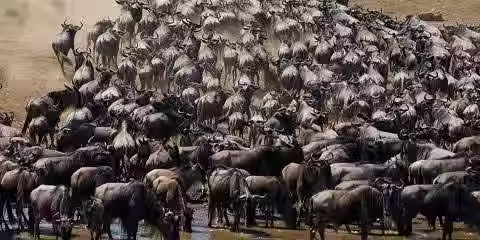
During this period, many herds move into the Western Corridor, approaching or crossing the Grumeti River. Although Grumeti crossings are usually less famous than Mara River crossings, they can still be dramatic, especially where crocodiles wait in ambush.
June is a superb compromise month. It combines improving weather, strong migration movement, and lower crowd pressure than July or August. Many experienced travelers consider June one of the smartest times to visit.
July – Prime Season Begins
July is when the Serengeti enters classic peak safari season. Dry weather is established, roads are easier, wildlife is easier to locate, and the migration pushes farther north.
Depending on rainfall patterns, some herds remain in western zones while others move toward the northern Serengeti. This means July can offer diverse experiences depending on camp location.
Tourist demand rises sharply in July because it aligns with summer holidays in many international markets. Lodges often book early. However, the reward is excellent weather and very strong wildlife viewing.
For honeymooners, first-time safari travelers, and guests seeking reliable dry season conditions, July is one of the strongest options.
August – Mara River Crossing Drama
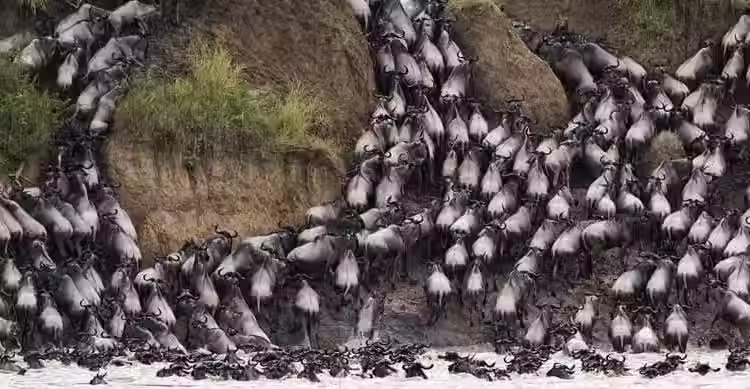
August is globally famous because it is one of the best months to witness the Mara River crossings in Northern Serengeti. Here, wildebeests gather at riverbanks, hesitate, panic, surge forward, retreat, and sometimes launch into chaotic mass crossings.
The danger is real. Fast currents, steep banks, confusion, and giant crocodiles all threaten the herds. Yet instinct drives them onward.
It is important to understand that crossings are unpredictable. You may wait hours or days without one, then suddenly witness one of the most dramatic wildlife scenes on Earth.
For travelers chasing the iconic migration moment seen in documentaries, August is often the target month.

September – One of the Best Overall Months
September is frequently considered one of the best all-around months for Serengeti safaris. Dry season conditions remain excellent, wildlife density is high, and northern migration activity often continues.
Crowds can be slightly more manageable than in August while still offering river crossing potential. Predator sightings are usually strong, and overall safari comfort is high thanks to pleasant weather and lower rainfall risk.
If someone asked for one month balancing weather, migration chance, and general safari quality, September would be a top recommendation.
October – Late Northern Season and Smart Value Choice
October can be an excellent insider choice. Some herds remain in the north, while others begin responding to changing rainfall patterns and drifting southward.
Tourist pressure often starts easing compared with peak August and September dates, yet wildlife viewing remains strong. This means travelers can still enjoy premium safari conditions with slightly better availability and sometimes better rates.
For guests wanting a high end safari without the most crowded peak weeks, October deserves serious consideration.
November – The Return South Begins
November usually brings the short rains. As fresh grass appears in central and southern regions, the migration begins turning southward again.
This creates a transitional safari season where herds are mobile and landscapes become greener. Birdlife is excellent, and visitor numbers are lower than peak dry season months.
For repeat safari travelers, November can be rewarding because it feels more dynamic and less commercial. You may not be chasing a single headline event like river crossings, but you gain atmosphere, scenery, and more private game drives.
December – Southern Plains Refill and the Cycle Resets
By December, many herds are back in the southern Serengeti and Ndutu zones, preparing for another calving season cycle. The plains begin filling again with wildebeest numbers that build week by week.
This month is excellent for holiday travel because wildlife viewing is strong, scenery improves with rain, and the migration is again entering one of its richest biological stages.
Families traveling during the festive season often choose December because it combines migration presence, warm atmosphere, and the anticipation of upcoming calving activity.
Best Time to Visit Serengeti Based on Travel Goals
For River Crossings
Choose August to September, with July and October also possible depending on rains.
For Calving Season
Choose late January through March, especially February.
For Predator Action
Choose February, March, August, and September, when vulnerable prey or dense herd movement creates opportunity.
For Fewer Crowds
Choose March, April, May, or November.
For Best Weather
Choose June through October.
For Better Value
Choose April, May, and November, when rates may be more favorable.
Final Verdict: What Is the Best Time to Visit Serengeti?
There is no single best month for every traveler. There is only the best month for your safari priorities.
If you want dramatic river crossings and dry season game viewing, target August or September. If you want newborn animals and intense predator drama, choose February. If you want giant herd movement with fewer crowds, consider May or June. If you want scenic green landscapes and value, March or November can be excellent.
The most successful Serengeti safari is not about choosing a famous month. It is about matching the right month, right region, and right camp to the experience you want. That is what transforms a safari from good to unforgettable.


Comments